
Int J App Pharm, Vol 17, Issue 3, 2025, 237-242Original Article
FISH GELATIN AND CHITOSAN-BASED ANTI-ACNE PATCH WITH TEA TREE OIL: DEVELOPMENT AND EVALUATION
BAYU EKO PRASETYO1,4*, MARIADI1,4, YADE METRI PERMATA2, LIA LAILA1,4, VIVIAN VICTORIA3, LAINY RAFIQAH3, DIAH NUKY RAHANI3
1Department of Pharmaceutics and Pharmaceutical Technology, Faculty of Pharmacy, Universitas Sumatera Utara, Medan-20155, Indonesia. 2Department of Pharmaceutical Chemistry, Faculty of Pharmacy, Universitas Sumatera Utara, Medan-20155, Indonesia. 3Undergraduate Program, Faculty of Pharmacy, Universitas Sumatera Utara, Medan-20155, Indonesia. 4Nanomedicine Center of Innovation, Universitas Sumatera Utara, Medan-20155, Indonesia
*Corresponding author: Bayu Eko Prasetyo; *Email: bayu@usu.ac.id
Received: 16 Jan 2025, Revised and Accepted: 28 Mar 2025
ABSTRACT
Objective: This study aimed to determine the antimicrobial activity of Tea Tree Oil (TTO) prepared in patch form using fish gelatin and chitosan. Abundant fish production has the potential as an alternative source of gelatin, especially for the development of patch dosage form.
Methods: The patch was prepared using a solvent-casting method. Four formulas containing 3% TTO were developed using gelatin variations of 5-12.5% (F1-F4), and the formula without T TO served as a blank (F0). Each of the patch produced was evaluated in organoleptic, pH, weight uniformity, folding resistance, thickness, drying shrinkage, moisture absorption and stability at room temperature (25±2 °C, 60% RH). The antibacterial activity tests against Propionibacterium acne (P. acne) were performed using the diffusion method.
Results: The produced patch formulas were considered to majorly have good organoleptic characteristics such as being solid, elastic, sticky, transparent, and pale yellow, with oil odor. Other evaluated characteristics included pH of 5.45-6.04, weight uniformity of 0.0208-0.0471 gr with a coefficient of variation of 0.10-1.85%, folding resistance>300 folds, thickness of 0.32-0.50 mm, drying shrinkage of 3.89-8.83%, and moisture absorption of 2.77-8.04%. All patch preparations were stable in storage for 3 mo at room temperature. TTO patches showed antibacterial activity with excellent inhibition zones in the range of 8.33±0.38 mm-14.45±1.35 mm.
Conclusion: The TTO patches are successfully produced using fish gelatin and chitosan, which meet patch requirements and have high potential as anti-acne product.
Keywords: Gelatin, Chitosan, Patch, Tea tree oil, Anti-acne
© 2025 The Authors. Published by Innovare Academic Sciences Pvt Ltd. This is an open access article under the CC BY license (https://creativecommons.org/licenses/by/4.0/)
DOI: https://dx.doi.org/10.22159/ijap.2025v17i3.53714 Journal homepage: https://innovareacademics.in/journals/index.php/ijap
INTRODUCTION
Gelatin is a high-molecular protein obtained from the hydrolysis of collagen fibers of animal connective tissues, including pig or cow skin and bones as well as fish skin, scale, and bone parts. This can be used in the pharmaceutical industry for capsule shell production and as a binding agent, thickening agent, edible film, and matrix in patch preparation. The application of gelatin in the pharmaceutical industry and food technology continues to increase yearly [1, 2]. Gelatin derived from fish waste is one of the alternative gelatins that can be utilized in the development of pharmaceutical dosage forms. Countries with vast seas and abundant fish production have great potential in the development of gelatin from fish waste. Fish bones and scales have been developed into gelatin with good quality [3, 4].
Indonesia is a tropical country prone to the occurrence of skin problems such as acne. Foreign particles, including dust, dirt, and oil that stick to the skin accumulate to clog the pores, thereby triggering acne formation [5]. External factors such as the environment, excessive physical activity, climate, food, age, and improper use of cosmetics can trigger acne [6]. Topical treatment and antibiotics are generally used to control acne [7, 8] but often initiate side effects in the form of skin irritation, organ damage, immune hypersensitivity, and antibiotic resistance [9].
Tea Tree Oil (TTO) is a natural oil from Melaleuca alternifolia with antibacterial properties due to the content of terpinene-4-ol. This works by increasing the permeability of bacterial cell membranes and can be used for acne vulgaris treatment [10]. For example, a previous study detected that 3% TTO had a very strong inhibition of 20.85 mm against P. acne bacteria, which is considered as one of the bacteria that can cause acne [11].
Anti-acne preparations have been developed in various dosage forms such as gel [12], cream [13], and lotion [14]. Currently, the patch form is innovative product development in promoting patient compliance, providing a long effect in one use, increasing safety and comfort for consumers [15], as well as covering inflamed acne to prevent bacteria contamination [16]. The use of natural polymers in patch preparation is also very important since it can produce biodegradable patches.
Patch preparations contain a certain dose of medicinal ingredients delivered directly to the affected skin area [16]. These were produced as good-quality films using suitable polymers, including gelatin or Hydroxypropyl Methylcellulose (HPMC) [17]. This polymer has been successfully used in the development of patch preparations such as anti-acne preparations containing Cortex Phellodendron amurense and Centella asiatica extracts, mulberry extract or black seed and clove extracts [18-20]. In previous studies, TTO has been developed in the form of patches using eudragit polymer and silicone resin [21], but no studies have been found using gelatin and chitosan, especially gelatin derived from the fish. Therefore, this study aimed to examine the application of fish gelatin and chitosan combination prepared in patch forms containing TTO with anti-acne potential. The physical characteristics and antibacterial activity were evaluated against P. acne.
MATERIALS AND METHODS
Materials
TTO was purchased from PT. Harli Multindo Pradja, Indonesia. The materials used in this study included acetic acid (Merck), Mueller-Hinton Agar (MHA), Nutrient Agar (NA), Nutrient Broth (NB) (Merck, Indonesia). Chitosan (medium molecular weight), Butylated Hydroxytoluene (BHT), methylparaben, propylene glycol, span 80 and distilled water were purchased from CV Rudang Jaya, Medan, Indonesia. The fish gelatin (Kuro®) was derived from bone of threadfin fish (Eleutheronema tridactylum). All chemical reagents were analytical grade and used without further purification.
Patch preparation
The patch preparation was conducted using a solvent-casting method without compared with other preparation methods. The gelatin (5-12.5 g) and 1 g of chitosan were mixed with 15 ml of distilled water and 15 ml of 1% acetic acid, respectively. Furthermore, the oil phase (chitosan with 2.5 ml span 80) and the water phase (gelatin, methylparaben, propylene glycol) were dissolved. Both phases were stirred until homogeneous, sufficed with distilled water, stirred again, allowed to stand with an aluminum foil covering, poured into a petri dish, and kept for 24 h at room temperature. After drying on 25±2 °C, the patch was removed from the mold and stored in a closed container [22, 23]. The composition of the patch formula is presented in table 1.
Table 1: TTO patch composition
| Composition | Function | Formula (%) | ||||
| F0 | F1 | F2 | F3 | F4 | ||
| TTO | Active substance | - | 3 | 3 | 3 | 3 |
| Fish gelatin | Polymers | 12.5 | 5 | 7.5 | 10 | 12.5 |
| Chitosan | Polymers | 1 | 1 | 1 | 1 | 1 |
| Methylparaben | Preservatives | 0.3 | 0.3 | 0.3 | 0.3 | 0.3 |
| Propylene glycol | Plasticizer | 7.5 | 7.5 | 7.5 | 7.5 | 7.5 |
| Span 80 | Solvent | 2.5 | 2.5 | 2.5 | 2.5 | 2.5 |
| Acetic acid 1% | Solvent | 15 | 15 | 15 | 15 | 15 |
| BHT | Antioxidants | 0.2 | 0.2 | 0.2 | 0.2 | 0.2 |
| Distilled water | Solvent | Ad 100 | Ad 100 | Ad 100 | Ad 100 | Ad 100 |
Organoleptic test
An organoleptic test was carried out to observe the physical appearance of the formulas, including the shape, color, and smell [17, 24].
pH test
A total of 5 g of patch was allowed to expand in a porcelain cup containing 50 ml of distilled water for 2 h at room temperature. Subsequently, a pH meter electrode was washed with distilled water and calibrated using standard solutions of pH 4 and 7 before being dipped into the sample until the number was shown on the screen [22].
Weight uniformity test
The uniformity test was carried out by measuring the weight of 3 patch formulas using an analytical balance and determining the mean and standard deviation of each. The same formula weight showed that the patch had uniformity of active substance content [25].
Folding resistance test
The folding resistance test was conducted by folding the patch multiple times in the same position. The number of folding resistance met the standard when the folds were>200. The folding resistance showed that the patch had good film consistency, preventing it from tearing easily [26, 27].
Thickness test
The test was carried out by measuring patch thickness at 3 different points using a caliper tool. This plays a role in physical properties, as a thin patch is more easily accepted for use [25].
Drying shrinkage test
The drying shrinkage test was conducted by weighing the patch before being kept in a desiccator containing silica for 24 h. Subsequently, the patch was reweighed and the drying shrinkage percentage was calculated. This test determines the moisture content because a good patch should not be extremely moist or dry to prevent tearing and breaking easily [25].
Moisture absorption test
The moisture absorption test was performed by weighing the patch stored in a desiccator containing silica for 24 h. The patch was transferred into a climatic chamber at 40 ℃ for 24 h and weighed again. This test is a parameter in determining the ability of the patch to absorb moisture. A low percentage value leads to a relatively stable patch and prevents microbial contamination. The hydrophilicity of the polymer or plasticizer used increases with the absorbency percentage of the films produced [25].
Stability test
Patch stability testing was carried out by storing the patches in a climatic chamber at room temperature (25±2 °C, 60% RH) for 3 mo of storage. Patch stability was evaluated for pH, folding resistance and thickness of patches every month [25].
Antibacterial activity testing of patch formulas
The bacteria tested was P. acnes ATCC 11827, which were isolated from Microbiology Laboratory of the Faculty of Pharmacy, Universitas Sumatera Utara. The antibacterial activity evaluation of patch formulas was carried out using the diffusion method. Furthermore, bacteria were inoculated into the media on a petri dish. MHA media were poured into each petri dish and homogenized evenly; then the media was allowed to solidify. Positive control, negative control, and TTO patch samples with various concentrations were positioned on the media then incubated at 37 °C for 24 h. Antibacterial activity was determined with the diameter of bacterial growth inhibition by measuring the clear zone formed around the patch using a caliper (Mitutoyo, Japan) [27].
Statistically analysis
Data on the difference in inhibition zones from antibacterial activity for all formulas were analyzed using the Statistical Package for the Social Sciences (SPSS) version 26, which included normality tests using Shapiro-Wilk and Kruskal-Wallis analysis to determine the average difference between groups.
RESULTS AND DISCUSSION
Organoleptic test
The produced gelatin patch showed similar shapes and physical characteristics (fig. 1). The organoleptic test was a visual examination of the preparation shape, smell, and color, with the results being presented in table 2 [9].
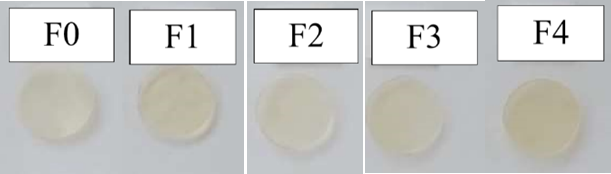
Fig. 1: Gelatin patch containing TTO
The organoleptic examination results physically correlated with the market preparation and there was no significant difference in shape, color, and odor. However, higher concentrations of applied gelatin led to a darker color of the patch. All of patches were solid, thin, elastic and sticky, but F0 showed slightly stiff. However, all patches produced had TTO odor.
Table 2: Organoleptic characterization of patch
| Parameter | F0 | F1 | F2 | F3 | F4 |
| Shape | Solid, thin, slightly stiff, sticky | Solid, thin, elastic, sticky | Solid, thin, elastic, sticky | Solid, thin, elastic, sticky | Solid, thin, elastic, sticky |
| Odor | Typical of TTO | Typical of TTO | Typical of TTO | Typical of TTO | Typical of TTO |
| Color | Intense yellow transparent | Pale yellow transparent | Pale yellow transparent | Pale yellow transparent | Intense yellow transparent |
Physical characterization of patch
PH measurement
The physical characterization of all patch formulas is presented in table 3. Moreover, pH testing was carried out to determine the degree of acidity of preparations safe for the skin. The patch should not be extremely alkaline or acidic to prevent the skin from becoming scaly and irritated [9]. Table 3 shows a range of 5.85-6.04 and there was a pH increase related to the high concentration of gelatin used in the preparation. But, it was signifying that the TTO acne patch preparation still met the topical pH requirements between 4-8 [9]. PH in this range is considered safe for the skin and does not cause significant side effects to the skin even if used for a long time. Preparations administered through the skin with extreme pH will be able to cause irritation because pH that is too acidic or alkaline (smaller than 2 or greater than 11), which is corrosive to the skin [28].
Table 3: Patch physical evaluation
| Formula | pH±SD* | Weight (gr)±SD* | Number of folds* | Thickness (mm)±SD* | Drying shrinkage (%) | Moisture absorbency (%) |
| F0 | 5.85 0.01 0.01 |
0.0234 0.0001 |
1473±15 | 0.40 0.01 |
8.97 | 7.39 |
| F1 | 5.640.01 |
0.0434 0.0001 |
1459±21 | 0.36 0.06 |
3.89 | 2.77 |
| F2 | 5.770.01 |
0.0340 0.0001 |
1445±12 | 0.40 0.01 |
5.95 | 3.49 |
| F3 | 5.870.01 |
0.0235 0.0001 |
1389±25 | 0.40 0.01 |
8.45 | 7.07 |
| F4 | 6.040.01 |
0.0201 0.0001 |
1526±20 | 0.40 0.01 |
8.83 | 8.04 |
(*Data were expressed in mean±SD, n=3)
Weight uniformity test
The test was conducted to determine the uniformity of weight ranging from 0.0201-0.0434 g between different patch formulas for the production of products with uniform doses. F4 had the smallest weight due to the different gelatin concentrations used, which caused variations in patch physical characteristics.
Folding resistance test
Folding resistance testing is an important indicator in physical evaluation to determine the preparation elasticity after folding. A patch has a good consistency, preventing it from breaking or tearing easily [9]. Based on the folding resistance test results, the patch preparations in F0-F4 met the requirements of >300. This result showed that the elasticity of the patch produced was very good, where this good elasticity property will add comfort when it is used. Factors affecting the preparation elasticity is propylene glycol used as a plasticizer, which increases patch mechanical properties including the elasticity [29]. The combination of gelatin and chitosan polymers has an effect in determining the elastic patch obtained because the inter-polymer possesses hydrophilic and hydrophobic properties preventing brittleness [30].
Thickness test
The test determines patch physical properties where thickness affects the release of active substances and consumer comfort; hence thinner patch facilitates the comfort of use. The results showed that F0-F4 thickness met the good requirements of<1 mm and could be affected when pouring a patch into a mold. Additionally, patch thickness affects the gelatin polymer used because higher polymer concentration increases the thickness value [9]. The thickness of the patch also greatly affects user comfort. Patches that tend to be thin will be easier to use and do not interfere with the activities of the user.
Drying shrinkage test
A drying shrinkage test was conducted to determine the amount of patch water loss after 24 h in the desiccator. Low moisture content suggests a stable patch protected from microbial contamination. A good patch should not be extremely dry to prevent breaking easily [9]. The test results showed that the formulas met the requirements of<10% [22]. F1 had the lowest drying shrinkage of 3.89%, while F0 and F4 had higher values exceeding 8.8%, signifying that gelatin polymer concentration increased with patch water content.
Moisture absorption test
The test was conducted to determine patch ability to absorb moisture at 40℃ for 24 h. Patch that absorbs high moisture shows poor quality affecting the component material elasticity [9, 31]. Based on the testing results, the formulas met the requirements of<10% [32]. F1 had the lowest absorbency of 2.77%, and F4 had the highest value of 8.04%. This shows that the gelatin polymer concentration increases proportionally with patch moisture absorption. The absorbency percentage increases with a high gelatin concentration due to the high hydrophilicity of the used polymer or plasticizer [30]. Storage in a place that is not humid and packaging that reduces contact with air are very important in ensuring that the patch product remains in a stable and undamaged condition.
Stability test
The test results showed excellent stability, and all TTO patch formulas did not change based on the organoleptic, pH, folding resistance, and thickness study during storage for 3 mo at room temperature (25±2 C, 60% RH). The only changes that occurred were very small and unable to affect patch physical characteristics. Data on pH, folding resistance, and thickness values are presented in fig. 2, 3, and 4.
Antibacterial activity against P. acne
The antibacterial activity of TTO patch preparations was examined using the disc diffusion method [33, 34]. Furthermore, the test was carried out by forming a patch with a circular punch tool according to the diameter of the disc paper and using a negative control that did not contain TTO. The gelatin patch preparation containing TTO oil showed an excellent antibacterial effect against P. acne. The negative control showed weak antibacterial activity which was attributed to the use of chitosan and preservatives possessing anti-bacterial effects. Tests were also carried out on antiacne patch preparations available in the market and the effects shown were not significantly different from the TTO-containing patch preparations (table 4). These results show the potential of patch preparations administered through the skin as anti-acne preparations where topical administration for anti-acne treatment is the majority of treatment given to acne patients [35, 36].
Although the gelatin patch preparation showed excellent antibacterial activity, there was a significant decrease in antibacterial activity compared to the TTO in the pure form, which showed an inhibition zone of 19.08±0.62 mm (P<0.05). This is likely due to the longer process of releasing the antibacterial active substance from the patch preparation compared to when it is still in pure oil form. The thickness of the patch also affects the release of the active substance where the thicker the patch, the release of the active substance to diffuse out of the membrane also becomes longer [30]. F1 shows the best antibacterial activity compared to other formula, indicating that the ratio of gelatin and chitosan (5:1) provided the best effect of active substance release from the membrane compared others.
Statistical testing shows the results of the normality test using the Saphiro-Wilk test obtained data p<0.05, which means that the distribution of research data is not normally distributed. The testing using non-parametric with Kruskal-Wallis test showed a value of 0.019 (p<0.05), which meant there was a significant difference. The inhibition zone of F0 was significantly different from F1, F2 and commercial product (P<0.05), but not significantly different from F3 and F4 (P>0.05).
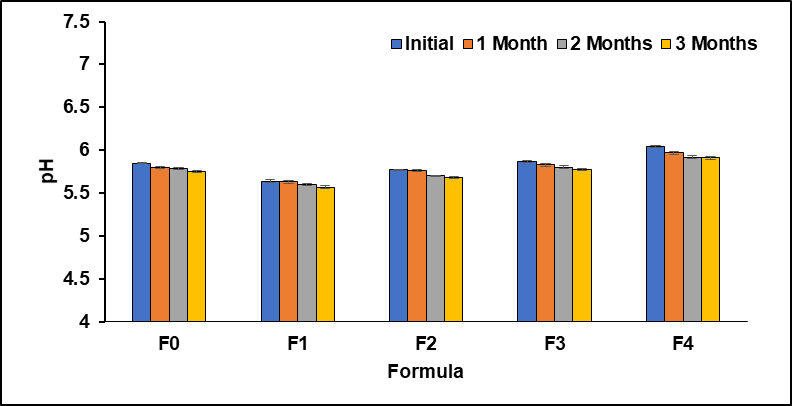
Fig. 2: PH of TTO patch for 3 mo storage (Data were expressed in mean±SD, n=3)
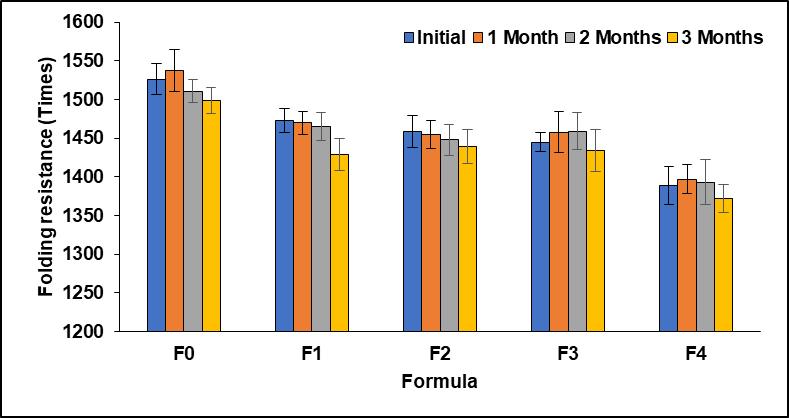
Fig. 3: Folding resistance of TTO patch for 3 mo storage (Data were expressed in mean±SD, n=3)
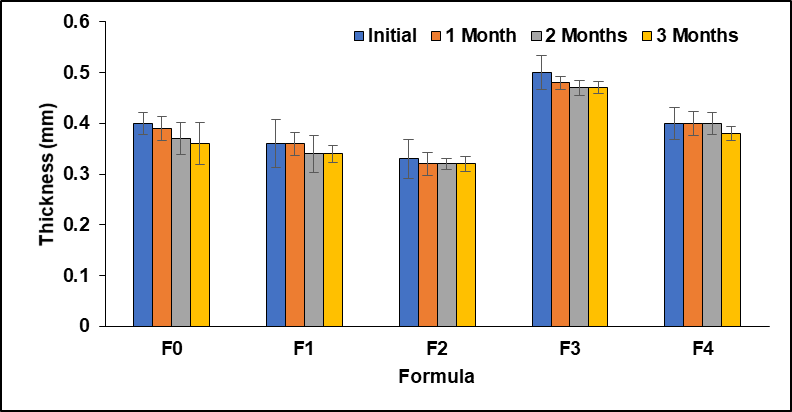
Fig. 4: Thickness of TTO patch for 3 mo storage (Data were expressed in mean±SD, n=3)
Table 4: The antibacterial activity of gelatin patch against P. acne
| Formula | Inhibition zone diameter (mm) |
| F0 | 8.33±0.38 |
| F1 | 14.45±1.35* |
| F2 | 14.16±1.00* |
| F3 | 13.81±0.44 |
F4 Commercial product |
13.00±0.42 14.18±0.42* |
*Means significant compared to F0, Data were expressed in mean±SD, n=3
The release of the active substance TTO from the patch membrane, which requires time indicates that the preparation of gelatin patch contained TTO has the potential to have a prolonged drug release effect. The small and thin dosage form will also increase comfort when used by users. Based on the antibacterial activity test, it showed that the preparation had the potential to be used as an antiacne preparation, but further testing is needed, especially in vivo tests and clinical testing.
This study also did not conduct active substance release tests and comparisons with the use of other polymers, especially in the use of fish gelatin sourced from other types of fish, which might also affect the release of active substances. Therefore, it is highly recommended for further research to conduct active substance release testing and also add other acne-causing skin pathogens so that it will be able to provide comprehensive information on the effectiveness of the patch preparation.
CONCLUSION
In conclusion, this study showed that an anti-acne patch with qualified physical characteristics was prepared using fish gelatin and chitosan base. Additionally, F1 had the best physical characteristics and antibacterial activity against P. acne with an inhibition zone of 14.45±1.35 mm. Patch containing gelatin/chitosan base and TTO were recommended to be developed as an anti-acne agent because it can be reducing fish waste and promoting biodegradable alternatives in pharmaceuticals.
ACKNOWLEDGEMENT
The authors are very thankful to Faculty of Pharmacy, Universitas Sumatera Utara for providing necessary facilities to carry out the research work.
FUNDING
This study was funded by the Universitas Sumatera Utara with the Grant number 91/UN5.2.3.1/PPM/KP-TALENTA/R/2023.
AUTHORS CONTRIBUTIONS
Bayu Eko Prasetyo and Lia Laila conceived and planned the experiments. Vivian Victoria, Lainy Rafiqah and Diah Nuky Rahani carried out the experiments. Vivian Victoria contributed to sample preparation. Yade Metri Permata and Mariadi contributed to the interpretation of the results. Bayu Eko Prasetyo and Vivian Victoria contributed in writing the manuscript. All authors review the final draft manuscript and give their approval.
CONFLICT OF INTERESTS
The authors declare no conflict of interest.
REFERENCES
Said MI. Role and function of gelatin in the development of the food and non-food industry: a review. IOP Conf Ser Earth Environ Sci. 2020;492(1):012086. doi: 10.1088/1755-1315/492/1/012086.
Ramos M, Valdes A, Beltran A, Garrigos MC. Gelatin-based films and coatings for food packaging applications. Coatings. 2016;6(4):41. doi: 10.3390/coatings6040041.
Nurilmala M, Ramadhan W, Putri AN. Characteristics of tilapia fish scale gelatin and its application in surimi. BIO Web Conf. 2024;112:09001. doi: 10.1051/bioconf/202411209001.
Rofikoh R, Darmanto YS, Fahmi AS. Quality of gelatin from tilapia (Oreochromis niloticus) by-products and its effects as edible coating on fish sausage during chilled storage. IOP Conf Ser Earth Environ Sci. 2021;919(1):012034. doi: 10.1088/1755-1315/919/1/012034.
Iskandar B, Putri RS, Novita G, Surboyo MD, Lee CK. Formulation and activity test of sunflower oil (Helianthus annuus L.) liquid soap as anti-acne. Int J Appl Pharm. 2022;14(3). doi: 10.22159/ijap.2022.v14s3.11.
Sifatullah N, Zulkarnain Z. Acne (acne vulgaris): review of infectious diseases of the skin. Proceeding Biologi Achieving Sustain Dev Goals Biodivers Confronting Clim Change. 2021;7(1):19-21. doi: 10.24252/psb.v7i1.22212.
Bienenfeld A, Nagler AR, Orlow SJ. Oral antibacterial therapy for acne vulgaris: an evidence-based review. Am J Clin Dermatol. 2017;18(4):469-90. doi: 10.1007/s40257-017-0267-z, PMID 28255924.
Oge LK, Broussard A, Marshall MD. Acne vulgaris: diagnosis and treatment. Am Fam Physician. 2019;100(8):475-84. PMID 31613567.
Wardani VK, Saryanti D. Transdermal patch formulation of papaya seed ethanol extract (Carica papaya L.) with hydroxypropyl methylcellulose (HPMC) base. Med J. 2021;4(1):42-3. doi: 10.13057/smj.v4i1.43613.
Ardiana D. Role of tea tree oil as a skin antimicrobial: a literature study. Med Health Sci J. 2021;5(1):26-33. doi: 10.33086/mhsj.v5i1.1921.
Esmael A, Hassan MG, Amer MM, Abdelrahman S, Hamed AM, Abd Raboh HA. Antimicrobial activity of certain natural-based plant oils against antibiotic-resistant acne bacteria. Saudi J Biol Sci. 2020;27(1):448-55. doi: 10.1016/j.sjbs.2019.11.006, PMID 31889869.
Kusuma AF, Abdassah M, Valas BE. Formulation and evaluation of anti-acne gel containing Citrus aurantifolia fruit juice using carbopol as gelling agent. Int J App Pharm. 2018;10(4):147-52. doi: 10.22159/ijap.2018v10i4.26788.
Cui H, Feng C, Guo C, Duan Z. Development of novel topical anti-acne cream containing postbiotics for mild to moderate acne: an observational study to evaluate its efficacy. Indian J Dermatol. 2022;67(6):667-73. doi: 10.4103/ijd.ijd_655_22, PMID 36998852.
Wiendarlina IY, Indriati D, Rosa M. Antibacterial activity of beluntas (Pluchea indica (L.) Less.) leaf extract anti-acne lotion. Fitofarmaka. 2019;9(1):16-25. doi: 10.33751/jf.v9i1.1256.
Qothrunnadaa T, Hasanah AN. Patches for acne treatment: an update on the formulation and stability test. Int J Appl Pharm. 2021;13(4):21-6. doi: 10.22159/ijap.2021.v13s4.43812.
Khan N, Pawar AP, Patil S, Patil PR, Patil PV, Patil PN. Formulation and evaluation of polyherbal anti-acne patch. MGM J Med Sci. 2024;11(2):234-41. doi: 10.4103/mgmj.mgmj_137_24.
Apriliani N, Laila L, Prasetyo BE. Utilization red dragon fruit peel (Hylocereus polyrhizus) ethanol extract in oral thin film strip as a mouth freshener. Int J App Pharm. 2024;16(3):304-11. doi: 10.22159/ijap.2024v16i3.50043.
Kuo CW, Chiu YF, WU MH, LI MH, WU CN, Chen WS. Gelatin/chitosan bilayer patches loaded with cortex Phellodendron amurense/Centella asiatica extracts for anti-acne application. Polymers (Basel). 2021;13(4):579. doi: 10.3390/polym13040579, PMID 33671908.
Saldaw A, Ananda LT, Hafis MR, Wafa S, Rizkita AD. Systematic review: natural acne patch base on nanomaterial gelatin/chitosan bilayer from mulberry extract. Sci Educ Proceeding International Conference on Religion. 2023;2:711-4.
Nadji W, Yousfi B, Barhouchi B, Salem R, Yassad S, Djekoun A. Formulation and development of an antiacne patch containing black seed and clove extracts by using chitosan gelatin as polymers matrix. J Mol Pharm Sci. 2024;3(1):26-37.
Minghetti P, Casiraghi A, Cilurzo F, Gambaro V, Montanari L. Formulation study of tea tree oil patches. Nat Prod Commun. 2009;4(1):133-7. PMID 19370891.
Patel K, Patel K, Zaveri M. Development optimization and evaluation of herbal patch formulation for acne treatment. Int J Pharm Investigation. 2022;13(1):74-81. doi: 10.5530/223097131792.
Lestari PM, Yati K. Effect of hydroxy propyl methyl cellulose as mucoadhesive polymer on the physical properties of clove oil patches (Syzygium aromaticum. L). J Pharm Sci. 2019;6(2):106. doi: 10.20527/jps.v6i2.7356.
Jamaludin WB, Muthia R, Kartini K, Setiawan F, Juhrah S, Yulida N. Formulation and evaluation of transdermal patches from Eleutherine bulbosa Urb. bulb extract with plasticizer variations. Int J App Pharm. 2024;16(1):94-7. doi: 10.22159/ijap.2024v16i1.46421.
Fatmawaty A, Nisa M, Irmayani I, Sunarti S. Patch formulation of mulberry leaf ethanol extract (Morus alba L.) with varying concentrations of polyvinyl pyrrolidone and ethyl cellulose polymers. J Pharm Med Sci. 2017;2(1).
Santra TS, Shinde AUS. Advanced drug delivery: methods and applications. Singapore: Springer Nature. 2023;349:26. doi: 10.1007/978-981-99-6564-9.
Prasetyo BE, Mariadi SE, Sitanggang RA, Butar butar AE, Amali S, Siahaan JF. Development of oral thin film strip contained ethanol extract of clove leaves (Syzygium aromaticum (L.) Merr and Perry). Indonesian J Pharm Clin Res. 2022;5(2):49-57. doi: 10.32734/idjpcr.v5i2.17919.
Hwang JH, Lee S, Lee HG, Choi D, Lim KM. Evaluation of skin irritation of acids commonly used in cleaners in 3D-reconstructed human epidermis model keraskintm. Toxics. 2022;10(10):558. doi: 10.3390/toxics10100558, PMID 36287839.
Kim S, Fouladian P, Afinjuomo F, Song Y, Youssef SH, Vaidya S. Effect of plasticizers on drug in adhesive patches containing 5-fluorouracil. Int J Pharm. 2022 Jan 5;611:121316. doi: 10.1016/j.ijpharm.2021.121316, PMID 34838623.
Ulfa M, Fatmawaty A, Dambur AM. Anti-acne patch formulation silkworm cocoon waste with HPMC and PVP variations. Indonesian J Pharm Sci Tech. 2023;10(3):151.
Nadendla RR, Priyanka PV. Optimizing transdermal patch formulation for enhanced delivery of rivaroxaban: a comprehensive design of experiments approach. Int J Pharm Pharm Sci. 2024;16(12):8-20. doi: 10.22159/ijpps.2024v16i12.51075.
Sari AP, Hening PT, Nikita M, Al Fatah AM, Riyadi FR, Rahayu ID. Formulation and characteristics of hydrogel patch containing pineapple peel (Ananas comosus L.) ethanol extract. Media Farmasi Indonesia. 2024;19(2):156-65. doi: 10.53359/mfi.v19i2.296.
Akila RM, Janani M. Development characterization and evaluation of the antimicrobial properties of biodegradable porous scaffolds loaded with natural vanillin. Int J Pharm Pharm Sci. 2023;15(11):31-7. doi: 10.22159/ijpps.2023v15i11.48987.
Dakone D, Zeleke G. Antibacterial activity evaluation of selected medicinal plants in comparison with some standard antibiotics. Int J Pharm Clin Res. 2028;10(9):229-33.
Choudhury D, Chakravarty P, Choudhury T. Study of drug utilisation pattern in acne vulgaris in dermatology outpatient department of a tertiary care hospital. Asian J Pharm Clin Res. 2024;17(10):156-9. doi: 10.22159/ajpcr.2024v17i10.53368.
Eko Prasetyo BE, Laila L, Hanum TI. Physical characterization of nanoemulgel containing ethanol extract of Curcuma mangga val. using Carbopol 940 as gelling agent. Res J Pharm Technol. 2022;15(7):3020-4. doi: 10.52711/0974-360X.2022.00504.