
Int J Curr Pharm Res, Vol 17, Issue 4, 129-130Short Communication
ANALYSIS OF GERIATRIC POPULATION VISITING EMERGENCY DEPARTMENT: A PROSPECTIVE STUDY
JAHNU BHOJ NAGAL*, BHUVNESHWARI JAITAWAT, TEJPAL YADAV, KAVITA JAIN
Department of Emergency Medicine, Jawaharlal Nehru Medical College, Ajmer, Rajasthan, India
*Corresponding author: Jahnu Bhoj Nagal; *Email: nagaljahnu@gmail.com
Received: 17 Apr 2025, Revised and Accepted: 10 Jun 2025
ABSTRACT
Keywords: Emergency department (ED), International classification of disease tenth revision ICD-10, Geriatric population.
© 2025 The Authors. Published by Innovare Academic Sciences Pvt Ltd. This is an open access article under the CC BY license (https://creativecommons.org/licenses/by/4.0/)
DOI: https://dx.doi.org/10.22159/ijcpr.2025v17i4.7048 Journal homepage: https://innovareacademics.in/journals/index.php/ijcpr
INTRODUCTION
With the global increase in life expectancy, the proportion of elderly individuals in the general population is rising. Consequently, emergency departments (EDs) are experiencing a growing number of visits by geriatric patients. [1] These patients often present with multiple comorbidities and atypical disease presentations, posing a challenge for emergency care providers.[2] This study aims to analyze the prevalence and characteristics of geriatric patients attending the ED. Understanding the prevalence and diagnostic spectrum of this population is essential for planning and resource allocation.
MATERIALS AND METHODS
This prospective observational study was carried out in the Emergency Department of Jawaharlal Nehru Medical College, Ajmer, Rajasthan, India, over a period of one year from January 2024 to December 2024. All patients aged 60 y and above presenting to the ED during this period were included. Data were collected using a structured performa and included demographic details, presenting symptoms, diagnoses. Diagnoses were classified according to International Classification of disease tenth revision (ICD-10 classifications). [3] The number of patients and their percentage representation were analyzed.
RESULTS
Total 178840 patients visits ED during one one-year of study period. Out of which 53653 were geriatric patients aged 60 y or above that constitute around 30% of total patients load of ED.
Table 1: ED diagnosis of geriatric patients according to ICD-10 codes
| ED diagnosis of elderly patients according to ICD-10 codes | Number of patients | Percentage of geriatric patients visiting ED |
| Diseases of the circulatory system | 15534 | 29 |
| Diseases of the respiratory system | 10714 | 20 |
| Injury (accidental) | 6428 | 12 |
| Diseases of the genitourinary system | 4950 | 9.2 |
| Diseases of the digestive system | 4285 | 08 |
| Endocrine and metabolic diseases | 2760 | 5.2 |
| Diseases of the skin and subcutaneous tissue | 2655 | 4.9 |
| Symptoms, signs, and abnormal clinic and laboratory findings, not classified elsewhere | 1953 | 3.6 |
| Diseases of the nervous system | 1697 | 3.1 |
| Infectious diseases | 1606 | 03 |
| Diseases of the blood | 1071 | 02 |
| Total geriatric patients visiting ED/total patients visiting ED | 53653/178840 | 30% of total ED visit |
Table 2: Showing analysis of diseases of the circulatory system
| Diseases of the circulatory system subdivision | Number of patients | Percentage of diseases of the circulatory system | Percentage of geriatric patients visiting ED |
| Cerebrovascular disease | 5902 | 38 | 11.1 |
| Ischemic heart disease | 6990 | 45 | 13.2 |
| Hypertensive diseases | 2097 | 13.5 | 3.9 |
| others | 388 | 2.5 | 0.8 |
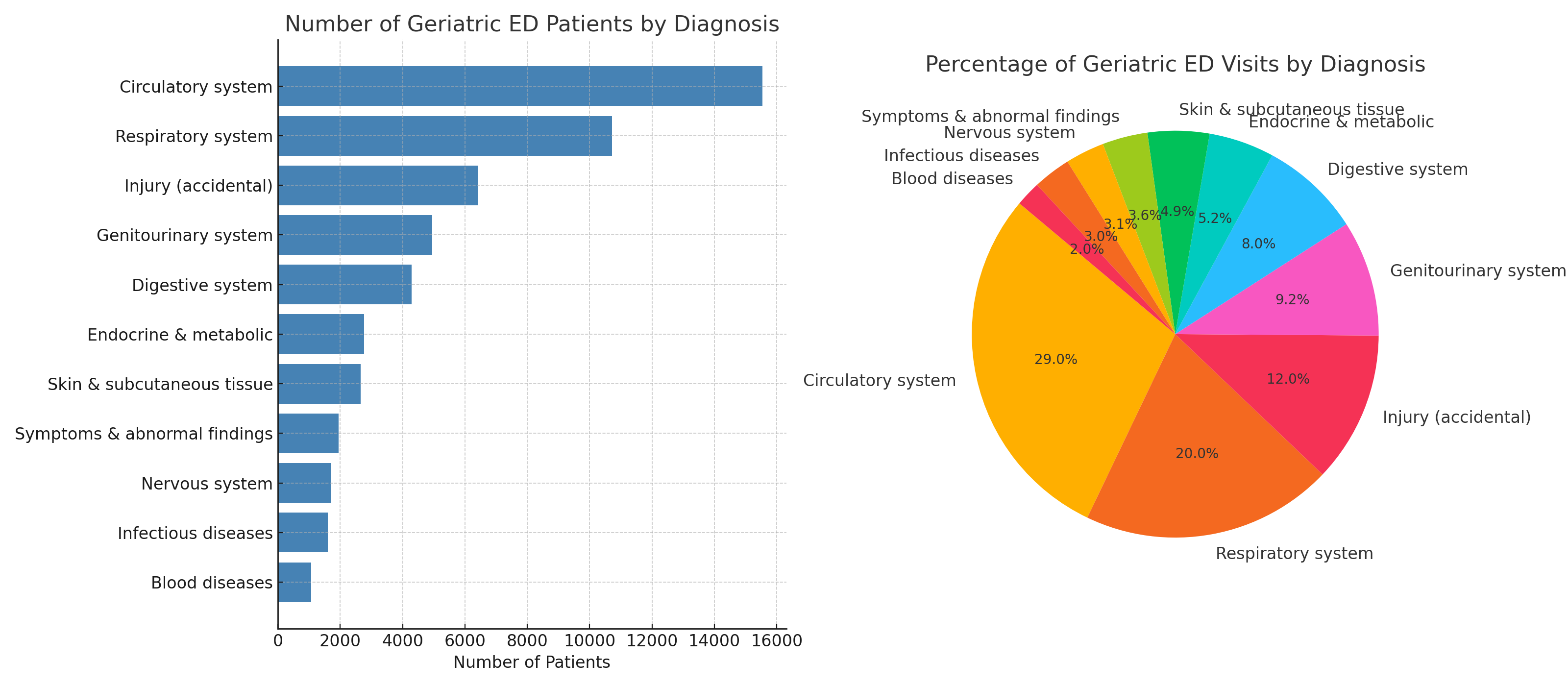
Fig. 1: Showing ED diagnosis of geriatric patients according to ICD-10 codes
DISCUSSION
As growing proportion of the population, older individuals will make up an increasingly larger share of ED visits in these years. This study describes ED visits made by adults aged 60 and over, assessing selected characteristics by classification of disease according to ICD 10. In our study out of 178840 ED visits 53653 (30%) were by geriatric patients. Ashman JJ et al. found that overall ED visit aged above 60year during period 2014-2017 was 43% [4]. Lumjeaksuwan M et al. in 2021 found that overall ED visit by elderly aged above 60 y was 30.91% [5]. Kaeley N et al. in 2021 studied 24768 patients above the age of 18 y visited the emergency department over a period of six months and found 5399 (27.5%) patients belonged to the geriatric age group more than 60 y of age [6].
The highest proportion of ED visits were due to disease of circulation (29%), respiratory (20%), and accidental injuries (12%). Keskinoglu P et al. in 2014 also found that ED diagnosis of elderly patients was diseases of the circulatory system around 21% followed by diseases of the respiratory system, around 19%.[7] Our study highlights the significant burden of circulatory and respiratory diseases among the elderly in emergency departments. The prevalence of accidental injuries also emphasizes the need for preventive strategies targeting fall risks in older adults.
CONCLUSION
The study reveals a substantial proportion of ED visits by the geriatric population, consistent with global trends. The predominance of cardiovascular and respiratory complaints underscores the burden of chronic illnesses in this age group. Effective triage, geriatric-specific protocols, and dedicated training for emergency physicians are essential to improve outcomes. Further research is warranted to explore long-term outcomes and resource utilization by geriatric ED visitors.
FUNDING
Nil
AUTHORS CONTRIBUTIONS
All authors have contributed equally
CONFLICT OF INTERESTS
Declared none
REFERENCES
Dey S, Nambiar D, Lakshmi JK, Sheikh K, Reddy KS. Health of the elderly in India: challenges of access and affordability. National Commission on Macroeconomics and Health; 2014.
Gruneir A, Silver MJ, Rochon PA. Emergency department use by older adults: a literature review on trends, appropriateness and consequences of unmet health care needs. Med Care Res Rev. 2011 Apr;68(2):131-55. doi: 10.1177/1077558710379422, PMID 20829235.
Lim SY, Jo YH, Kim S, Ko E, Ro YS, Kim J. Emergency department utilization in elderly patients: a report from the national emergency department information system (NEDIS) of Korea, 2018-2022. Clin Exp Emerg Med. 2023;10:S26-35. doi: 10.15441/ceem.23.146, PMID 37967860.
Ashman JJ, Schappert SM, Santo L. Emergency department visits among adults aged 60 and over: United States, 2014-2017. NCHS Data Brief. 2020 Jun;367:1-8. PMID 32600519.
Lumjeaksuwan M, Patcharasopit S, Seksanpanit C, Sritharo N, Aeampuck A, Wittayachamnankul B. The trend of emergency department visits among the elderly in Thailand. WHO South East Asia J Public Health. 2021;10(1):25-8. doi: 10.4103/WHO-SEAJPH.WHO-SEAJPH_67_21, PMID 35046154.
Kaeley N, Kumar J, Kumar M, Vempalli N, Dhar M, Bhardwaj BB. Prevalence and pattern of geriatric emergencies in a teaching hospital of North India. J Fam Med Prim Care. 2021;10(10):3899-903. doi: 10.4103/jfmpc.jfmpc_2450_20, PMID 34934699.
Keskinoglu P, Inan F. Analysis of emergency department visits by elderly patients in an urban public hospital in Turkey. J Clin Gerontol Geriatr. 2014;5(4):127-31. doi: 10.1016/j.jcgg.2014.07.001.