
Int J Curr Pharm Res, Vol 18, Issue 1, 65-68Original Article
PHARMACOLOGICAL EVALUATION OF DIURETIC ACTIVITY OF ETHANOLIC EXTRACT OF HIBISCUS ROSA SINENSIS FLOWERS IN RATS
RAVINDER KAUR*, AJEET PAL SINGH, AMAR PAL SINGH
Department of Pharmacology, St. Soldier Institute of Pharmacy, Lidhran Campus, Behind NIT (R. E. C.), Jalandhar-Amritsar by pass, NH-1, Jalandhar-144011, Punjab, India
*Corresponding author: Ravinder Kaur; *Email: ravinderkaur56@gmail.com
Received: 06 Oct 2025, Revised and Accepted: 26 Nov 2025
ABSTRACT
Objective: To evaluate the diuretic activity of the ethanolic extract of Hibiscus rosa-sinensis flowers in albino rats.
Methods: The study used the Lipschitz test to assess diuretic activity in rats divided into four groups: control, standard (Frusemide 10 mg/kg), and test groups receiving extract doses of 200 mg/kg and 400 mg/kg. Urine was collected from all rats placed in metabolic cages, with parameters such as urine volume, pH, and concentrations of sodium, potassium, and chloride measured over 5 to 24 h.
Results: The ethanolic extract significantly increased urine output and the excretion of sodium, potassium, and chloride at both tested doses, with the higher dose showing effects comparable to the standard diuretic Frusemide. No significant alteration in urine pH was observed.
Conclusion: The ethanolic extract of Hibiscus rosa-sinensis flowers demonstrated dose-dependent diuretic activity and elevated electrolyte excretion, supporting its potential as a safe, orally active diuretic agent for further pharmacological research
Keywords: Ethanolic extract of Hibiscus rosa sinensis flowers, Alcoholic extract, Hydrated rats, Diuretic activity, Metabolic cage
© 2026 The Authors. Published by Innovare Academic Sciences Pvt Ltd. This is an open access article under the CC BY license (https://creativecommons.org/licenses/by/4.0/)
DOI: https://dx.doi.org/10.22159/ijcpr.2026v18i1.8027 Journal homepage: https://innovareacademics.in/journals/index.php/ijcpr
INTRODUCTION
The kidneys are essential, bean-shaped organs that work together to regulate the body's internal environment by eliminating waste and controlling body temperature, pH, electrolyte balance, and fluid volume. They are a major subject of pharmacological research, particularly with regard to diuretics, because of their critical involvement in drug elimination. Drugs called diuretics, which increase the excretion of sodium and water ions, are often used to treat kidney and cardiovascular conditions, such as heart failure, hypertension, and oedema [1]. They function at distinct nephron segments: passive reabsorption of water also takes place, while active transport reabsorbs around 70% of sodium in the proximal tubule. In its thick ascending limb, the Loop of Henle aids in active sodium reabsorption, whereas in its descending limb, it facilitates passive water diffusion. In the collecting ducts, potassium is released while sodium is reabsorbed, and sodium reabsorption proceeds in the distal convoluted tubule. Diuretics, also referred to as "water pills," promote urine and aid with the removal of extra fluid, which facilitates breathing and lessens the strain on the heart. However, since they might upset the body's mineral balance, they shouldn't be taken to lose weight. Certain foods and natural compounds also have diuretic qualities, even though prescription diuretics are often given. The kidneys are two organs that resemble beans. The renal cortex, also known as the peripheral cortex, the inner medulla, sometimes known as the renal medulla, and the renal pelvis are the three primary parts of the kidney. Drugs called diuretics change how the kidneys work. They treat renal and cardiovascular conditions. Drugs and their metabolites are removed from the body in large part by the kidneys. Drugs known as diuretics cause an increase in the excretion of sodium and water ions. The kidney's primary job is to keep the body's internal environment stable by eliminating waste, controlling body temperature, and preserving fluid volume, pH, and electrolyte balance. Equal amounts of sodium must be taken in and eliminated; otherwise, major problems including decreased cardiac blood flow or renal failure might arise. The Bowman's capsule is where the glomerular filtration process begins. The proximal tubule is where around 70% of sodium reabsorption takes place. The proximal convoluted tubule is responsible for both active and passive reabsorption of salt and water. A large ascending limb and a slender descending limb make up the Loop of Henle. The loop of Henle is responsible for the active reabsorption of sodium and the passive diffusion of water. The thick ascending limb is where sodium is reabsorbed. Water is expelled from the limb that descends. The reabsorption of salt occurs in the thick ascending limb, and it is not balanced by the reabsorption of water. It enters the distal convoluted tubule, where sodium reabsorption occurs. The collecting duct is where the distal convoluted tubule empties [2, 3].
Hibiscus rosa sinensis is natural remedies due to its rich phytochemical composition and wide-ranging therapeutic effects recognized by the World Health Organization for its effectiveness in traditional medicine systems and contain (e. g., quercetin and cyanidin derivatives), cyclopeptide alkaloids, ascorbic acid, riboflavin, thiamine, ß-sitosterol, and unique cyclic acids like sterculic and malvalic acids. All parts of the plant have shown significant pharmacological activities, including anti-inflammatory, analgesic, antifertility, antiovulatory, antitumor, antiestrogenic, antipyretic, spasmolytic, CNS depressant, hypotensive, antifungal, antibacterial, antiviral, and hypoglycemic effects. With its broad therapeutic potential, it is emerging as a valuable herbal medicine in both self-care and professionally managed healthcare systems [4-6]
MATERIALS AND METHODS
Chemicals and reagents
All the chemicals and biochemical reagents employed in this study were of analytical grade and were freshly prepared prior to use. The analytical-grade chemicals were procured from Sigma Chemical (USA) and SD Fine Chem. Ltd. (India).
Collection and identification of plant
The flowers part of Hibiscus rosa sinensis was collected from the herbal garden, St. Soldier Institute of Pharmacy, Jalandhar. This plant was identified and Morphological authenticated by Dr. (Mrs.) Sunita Garg, Head, Raw Materials Herbarium and Museum, Delhi (RHMD), National Institute of Science Communication And Information Resources (CSIR-NISCAIR), New Delhi. Reference number: NISCAIR/RHMD/Consult/2020/3705-06 dated.
Experimental animals
Albino rats (150–200 g, either sex) maintained in the central animal facility at St. Soldier Institute of Pharmacy, Jalandhar, Punjab, under controlled laboratory settings with a 12 h light/dark cycle. The animals are pellets in polypropylene cages with husk bedding and received free water. They adjusted to the lab before experimenting. All operations were done in a semi-soundproof lab from 8:00 to 16:00. The Institutional Animal Ethics Committee (IAEC) approved the study protocol, which followed the guidelines of the Committee for the Purpose of Control and Supervision of Experiments on Animals (CPCSEA), Ministry of Environment and Forests, Government of India (Reg. No. 2011/PO/Re/S/18/CPCSEA; registered on 01/05/2018). We tried to minimise animal pain during experiments. The study protocol was approved by IAEC/CPCSEA (IAEC/SSIP/2023/PR-037).
Acute oral toxicity study [7, 8]
Drugs and chemicals are increasingly used in food, medicine, beverages, and industrial and domestic items. Extended usage may induce chronic toxicity, whereas high dosages can cause acute toxicity with rapid consequences. These effects vary by drug from moderate to severe. Acute toxicity occurs within 24 h of exposure and typically damages organs or biochemistry. Researchers measure the lethal dosage (LD50), which kills 50% of test animals, to analyse this behaviour, recuperation, and other biological impacts occur with death. These studies give crucial safety, therapeutic index, and risk data before a chemical is approved for general use. Existing testing procedures have limitations and may need numerous test animals, stressing the need for better methods. An accurate and animal-friendly acute toxicity assessment approach is the goal of this investigation. The ethanolic extract of Hibiscus rosa-sinensis flowers will be tested at low, medium, and high dosages according to OECD guideline 423.
Method
Five rats that have fasted overnight will be administered EHRS orally by gavage at different dosage levels (5, 50, 300, and 1000). Following extract administration, the animal will be monitored for tremors, convulsions, salivation, diarrhoea, lethargy, sleep, and coma, as well as for changes in behavioural responses. The animal will also be monitored for toxic symptoms and mortality for up to 14 d. The survivor rats will be recovered and used again in tests after a 14-day period of acute oral toxicity.
Rat as a model for experimentation [9-11]
Rats' genetic, anatomical, and physiological similarities to humans make them popular experimental models. Mice may be used to investigate human illnesses since more than 95% of their genomes match those of people. In order to better understand the neurobiology of mental illnesses and test novel medications, research on anxiety, depression, and other brain-related diseases often uses animal models. Since over 90% of human genes are shared by rodents, particularly mice, they are useful. Additionally, they have useful qualities that make experiments easier to handle, such cheap cost, minimal dosage needs, ease of handling, and quick breeding. Additionally, animal models are crucial in the development of novel therapies for conditions including heart failure, hypertension, renal issues, and others.
Body weight analysis
Weekly body weight assessments will be documented throughout the research period.
Statistical analysis
The acquired data will be analysed using a T-test or one-way ANOVA (GraphPad Prism version 5.00 software), succeeded by an appropriate post hoc test.
Acute oral toxicity study [12]
The median lethal dose (LD50) of EHRS was ascertained following the Organisation for Economic Co-operation and Development (OECD, 425) guidelines, utilising five rats that were fasted overnight prior to administration of EHRS extract at a maximum dose of 1000 mg/kg orally, commencing from doses of 5, 50, and 300 mg/kg. One rat was originally given a dosage, and food was then withheld for four hours. Observations were conducted for the first 24 h and thereafter for 14 d to detect symptoms of toxicity, including alterations in mucous membranes, skin, fur, and eyes, as well as circulatory, respiratory, somato-motor activity, behavioural patterns, and death. No alterations in behavioural reactions have been seen, and observations indicate the absence of acute oral toxicity. The remaining four rats were given the dosage and monitored for two weeks. The LD50 was subsequently calculated.
The lipschitz test and estimation of urine electrolytes [13, 14]
Hibiscus rosa-sinensis flower ethanolic extract was investigated for diuretic efficacy in albino rats utilising Lipschitz. Before screening, rats were given distilled water and chosen if they excreted 40% of the volume. Four sets of six animals were acclimatised in metabolic cages under conventional settings. Rats were starved and waterless before experiments. Group I got saline as the control, Group II received Frusemide (10 mg/kg), and Groups III and IV received 200 and 400 mg/kg of the extract. Urine volumes were monitored at regular intervals up to 24 h after dose to determine diuretic activity. The ethanolic extract dose-dependently enhanced salt, potassium, and chloride excretion, suggesting a diuretic action. The extract's potassium-sparing capacity needs additional study since excessive potassium loss might cause hypokalaemia. Flower secondary metabolites like flavonoids and glycosides may be active. The extract has diuretic efficacy equivalent to conventional medicines, supporting its historic usage.
RESULTS AND DISSCUSSION
The alcoholic extract of flowers of Hibiscus rosa sinensis on urine volume up to 5 h and electrolyte concentration in hydrated rat model in albino rats by the Lipschitz Test and shown in fig. 1 and 2.
Fig. 1: Effect of ethanolic flowers of Hibiscus rosa sinensis on total urine volume (in 5 h)
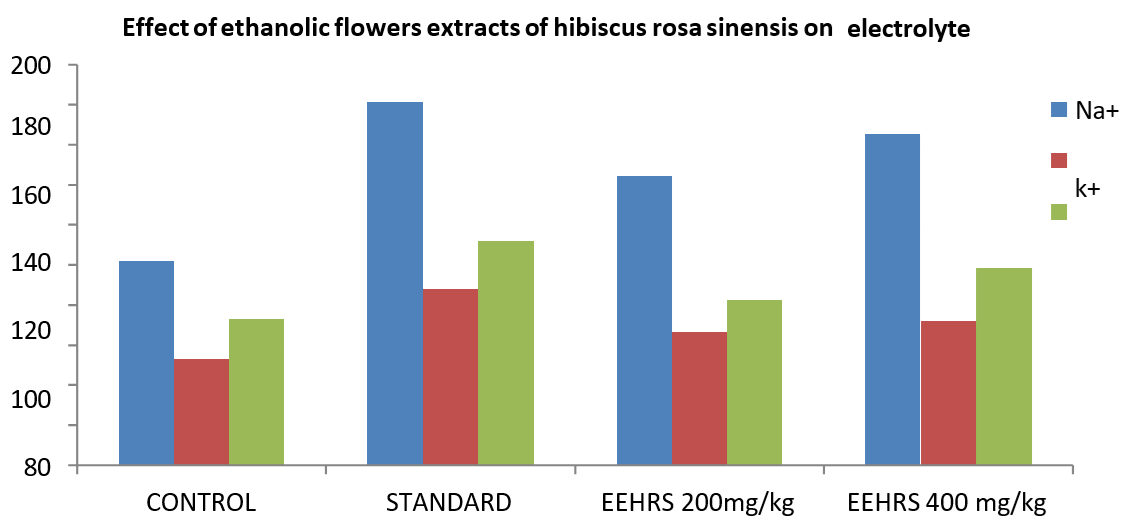
Fig. 2: Effect of Ethanolic flowers of Hibiscus rosa sinensis on urinary electrolyte concentration (in 5 h)
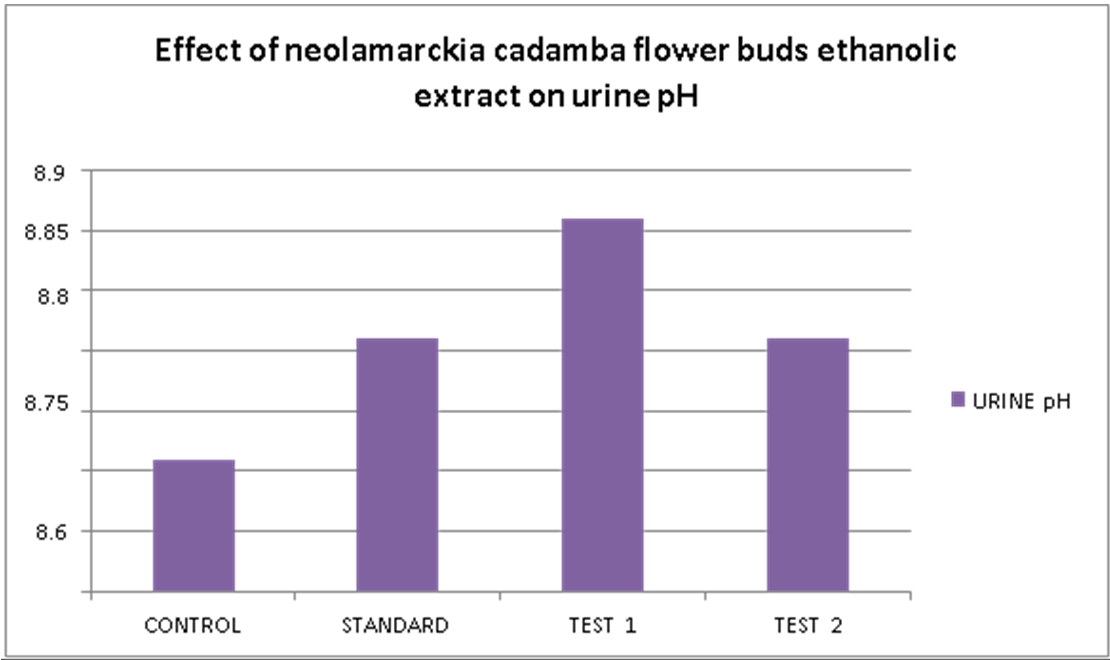
Fig. 3: Showing effects of ethanolic effect of flowers of Hibiscus rosa sinensis on pH in hydrated rats
The alcoholic extract of flowers of Hibiscus rosa sinensis on urine volume up to pH in hydrated rats by the lipschitz test and shown in fig. 3.
By raising urine production and improving the excretion of salt, potassium, and chloride in comparison to the control group, the alcoholic extract of Hibiscus rosa-sinensis flowers demonstrated evident diuretic action. The impact was dose-dependent; no significant change in urine pH was seen, but the larger dosage resulted in a bigger increase in urine volume and electrolyte loss. Significant diuretic effects were shown by the extract as compared to the usual medication Frusemide, particularly with regard to urine electrolytes. These results imply that the extract may function as a potent oral diuretic. Mechanisms include enhanced glomerular filtration rate, partial suppression of antidiuretic hormone (ADH), increased renal blood flow, or stimulation of natriuretic peptide release might be responsible for the action. The extract's inherent ability to produce the desired effect is shown by the dose-dependent action. The combined action of bioactive substances like flavonoids and glycosides is probably what causes the diuretic response. To identify the active ingredient and elucidate the precise mechanism behind its diuretic activity, further research is required.
CONCLUSION
The ethanolic extract of Hibiscus rosa-sinensis flowers showed clear, dose-dependent diuretic activity in rats, significantly increasing urine volume and excretion of sodium, potassium, and chloride, with effects similar to the standard drug Frusemide. This supports its use as a safe and effective natural diuretic agent for further pharmacological studies
ACKNOWLEDGMENT
It’s our privilege to express the profound sense of gratitude and cordial thanks to our respected chairman Mr. Anil Chopra and Vice Chairperson Ms. Sangeeta Chopra, St. Soldier Educational Society, Jalandhar for providing the necessary facilities to complete this research work.
AUTHORS CONTRIBUTIONS
All authors have contributed equally
CONFLICT OF INTERESTS
Declared none
REFERENCES
Dehkordi FR, Kamkhah AF. Antihypertensive effect of Nigella sativa seed extract in patients with mild hypertension. Fundam Clin Pharmacol. 2008;22(4):447-52. doi: 10.1111/j.1472-8206.2008.00607.x, PMID 18705755.
Zarei MH, Lorigooini Z, Amini Khoei H, Bijad E. Acute oral toxicity assessment of galbanic acid in albino rat according to OECD 425 TG. Toxicol Rep. 2023 July 6;11:111-5. doi: 10.1016/j.toxrep.2023.07.001, PMID 37456531, PMCID PMC10345851.
Cleveland Clinic. Diuretics overview. Cleveland OH: Cleveland Clinic. Available from: http://my.clevelandclinic.org/health/drugs_devices_supplements/hic_diuretics. [Last accessed on 28 Sep 2025].
National Institute for Health and Care Excellence (NICE). Diuretics. Available from: https://bnf.nice.org.uk/treatment-summary/diuretics.html. [Last accessed on 28 Sep 2025].
Hobson RM, Maughan RJ. Hydration status and the diuretic action of a small dose of alcohol. Alcohol Alcohol. 2010;45(4):366-73. doi: 10.1093/alcalc/agq029, PMID 20497950.
Sachdewa A, Khemani LD. Effect of Hibiscus rosa sinensis Linn. Ethanol flower extract on blood glucose and lipid profile in streptozotocin induced diabetes in rats. J Ethnopharmacol. 2003 Nov 1;89(1):61-6. doi: 10.1016/S0378-8741(03)00230-7, PMID 14522433.
Jimenez Ferrer E, Alarcon Alonso J, Aguilar Rojas A, Zamilpa A, Jimenez Ferrer CI, Tortoriello J. Diuretic effect of compounds from Hibiscus sabdariffa by modulation of the aldosterone activity. Planta Med. 2012;78(18):1893-8. doi: 10.1055/s-0032-1327864, PMID 23150077.
Kreydiyyeh SI, Usta J. Diuretic effect and mechanism of action of parsley. J Ethnopharmacol. 2002;79(3):353-7. doi: 10.1016/S0378-8741(01)00408-1, PMID 11849841.
Ghadigaonkar S. Evaluation of antibacterial activity of ethanolic and aqueous leaf extract of Hibiscus rosa-sinensis in mice. J Pharm Innov. 2023;12(1):27-30. doi: 10.22271/tpi.2023.v12.i1a.18010.
Leong XF, Rais Mustafa M, Jaarin K. Nigella sativa and its protective role in oxidative stress and hypertension. Evid Based Complement Alternat Med. 2013;2013:120732. doi: 10.1155/2013/120732, PMID 23533459.
Mayo Clinic Staff. Edema definition. Rochester MN: Mayo Clinic. Available from: https://www.mayoclinic.org/diseases-conditions/edema/basics/definition/con-20033037. [Last accessed on 28 Sep 2025].
Vysakh A, Jayesh K, Helen LR, Jyothis M, Latha MS. Acute oral toxicity and anti-inflammatory evaluation of methanolic extract of Rotula aquatica roots in Wistar rats. J Ayurveda Integr Med. 2020;11(1):45-52. doi: 10.1016/j.jaim.2017.09.007, PMID 30120055, PMCID PMC7125367.
Sayana SB, Khanwelkar CC, Nimmagadda VR, Dasi JM, Chavan VR, Kutani A. Evaluation of diuretic activity of alcoholic extract of roots of Cissampelos pareira in albino rats. J Clin Diagn Res. 2014;8(5):HC01-4. doi: 10.7860/JCDR/2014/8192.4350, PMID 24995192, PMCID PMC4080013.
Sundaresan PK, Prabhakaran SS, Palappallil DS, Chellappan D. Diuretic activity of ethanolic extract of whole plant of Sphaeranthus indicus Linn in albino rats. Int J Basic Clin Pharmacol. 2017;6(2):265-70. doi: 10.18203/2319-2003.ijbcp20164850.