
Int J Pharm Pharm Sci, Vol 17, Issue 10, 7-14Review Article
BLOCKCHAIN TECHNOLOGY AN INNOVATIVE METHOD WITH REVOLUTIONARY ADVANTAGES AND THREATS FOR THE HEALTHCARE INDUSTRY-A COMPREHENSIVE REVIEW
SANJAY KUMAR GUPTA1*, FAZLU REHMAN2, UTTAM PRASAD PANIGRAHY3, AKKI RAJESH4
1Department of Pharmaceutics, Global College of Pharmacy Hyderabad, India. 2Department of Pharmaceutical Science, Global College of Pharmacy, Hyderabad. India. 3Faculty of Pharmaceutical Science, Assam down town University, Guwahati, Assam, India-781026. 4Department of Pharmaceutics, Hindu College of Pharmacy, Guntur, (AP), India
*Corresponding author: Sanjay Kumar Gupta; *Email: snj.gupta4@gmail.com
Received: 26 Dec 2024, Revised and Accepted: 02 Aug 2025
ABSTRACT
Blockchain is a distributed, decentralised ledger system that securely, openly, and irrevocably records and saves data. Blockchain technology is indeed a ground-breaking innovation that is transforming various industries, including the pharmaceutical sector. Blockchain was first created for crypto currencies in order to provide protection against a high risk of fraud and theft while doing away with the necessity for middlemen like banks. The global blockchain technology market in healthcare is experiencing rapid growth, projected to expand from $7.04 billion in 2023 to over $20 billion by 2030. By 2026, blockchain use in India may have risen to a staggering 46%. According to experts, the government intends to create the National Blockchain Portal. This remarkable growth is driven by several key factors, including enhanced data security, streamlined processes, interoperability, regulatory compliance, and the rise of telemedicine. By leveraging blockchain, the pharmaceutical industry could not only streamline operations but also provide higher levels of accountability, improving both safety and trust within the sector. Hospitals, diagnostic labs, pharmacy chains, and other healthcare organisations store and exchange patient data via a blockchain network. Blockchain helps prevent certain risks and provides decentralized safety for healthcare data. From the procurement of raw materials to production, distribution, and delivery, blockchain can monitor every phase of the drug's lifecycle. This ensures that all steps are transparent and auditable, making it harder for counterfeit drugs to enter the market. The Drug Supply Chain Security Act (DSCSA) was enacted into law in 2013 with the goal of safeguarding the integrity of the pharmaceutical supply chain in the US. It focuses on preventing the distribution of stolen, counterfeit, or tainted drugs by establishing requirements for tracing, verification, and product identification. This report explored the technology of blockchain and its notable progress in healthcare.
Keywords: Blockchain, Distributed ledger technology, Distributed ledger, Cold chain, Cryptocurrencies
© 2025 The Authors. Published by Innovare Academic Sciences Pvt Ltd. This is an open access article under the CC BY license (https://creativecommons.org/licenses/by/4.0/)
DOI: https://dx.doi.org/10.22159/ijpps.2025v17i10.53529 Journal homepage: https://innovareacademics.in/journals/index.php/ijpps
INTRODUCTION
Blockchain is type of Distributed Ledger Technology (DLT) refers to a decentralized digital system for recording and managing data across multiple nodes or locations. Unlike traditional centralized databases, DLT ensures that data is not stored in a single central authority but is shared across a network of participants, making it highly secure, transparent, and resistant to tampering or single points of failure. Blockchain offers a robust solution to address many challenges outlined by the Drug Supply Chain Security Act (DSCSA). The DSCSA, enacted in the United States, focuses on enhancing the security and traceability of pharmaceutical products as they move through the supply chain. Blockchain is a distributed, decentralized ledger system that uses cryptographic algorithms to safeguard the peer-to-peer communication of transactions. It can improve medical data interchange within the health care organization in terms of efficiency, integrity, and accountability. This technology uses a decentralized network of nodes to securely retain and manage data. This decentralized structure offers significant advantages for safeguarding sensitive data. Blockchain makes it easier to find volunteers who fit certain trial needs by screening a single patient database. This technology's goal is to digitally secure files. Using Google Docs as an example, we can learn about blockchain technology. When a document is developed and shared with a group of people, it is disseminated rather than copied or transferred. Blockchain is more complex than Google Docs, though. In one word, blockchain is distributed ledger technology, which uses decentralization to make any digital asset recognizable and immutable [1-4].
Blockchain makes it possible to capture and share digital information. Blockchain is an unchangeable, undeletable, and irreversible record of transactions. Blockchain technology was first conceptualised in 1991 by Stuart Haber and W. Scott Stornetta. However, it wasn't until 2009 that blockchains gained significant attention when they were implemented as the underlying technology for Bitcoin. Satoshi Nakamoto is the persons who developed bitcoin. Since then, blockchain has been used in the construction of smart contracts, tokens that are not fungible, decentralised financial programs, and numerous types of cryptocurrencies [5, 6].
Blockchain is an advanced database mechanism designed to enhance transparency, security, and efficiency in information sharing, especially within business networks. Data is kept in blocks that connect one another in a chain within a blockchain database [7].
Blockchains represents a significant shift from conventional data management techniques
A conventional database has a central database administrator and one central server (or server network) that stores all of the data. Lastly, data is transferred to the ledger. Instead of requiring central data administration, blockchain is a data management technique where data is appended to an electronic ledger that is distributed throughout a peer-to-peer network. When transparency and immutability are desirable, blockchain works best for recording transactions with a small digital footprint. Data, including medical records, are kept in blocks on a blockchain. After the data required to finish it has been entered, a new block is created for the next data entry and added to the chain of previous blocks. Just as there is no one database, there is also no one "blockchain." Instead, the blockchain idea may be implemented in a variety of ways, each with distinctive advantages and operation-related costs [8, 9].
New information can be added to the blockchain, but once a block is uploaded, nobody can edit or remove it. If any part of the data block were later changed, the hashing technique would produce a new code that would not work with the existing codes in that blockchain. This would notify network users of a possible instance of data tampering [10].
Key features of blockchain technology
Distributed ledger
A distributed ledger is a decentralized database that is shared, replicated, and synchronized among the members of a network. Unlike a centralized database managed by a single entity, a distributed ledger is maintained across multiple locations or participants, ensuring transparency, security, and resilience
Near real-time updates
Blockchain technology enables near real-time updates across various applications, enhancing transparency, efficiency, and security. Real-time blockchain tracking allows for precise inventory management and demand forecasting. By instantly tracing items through the supply chain, companies can swiftly address disruptions and maintain operational continuity [11].
Chronological and time-stamped
Blockchain technology is inherently chronological and time-stamped because it was designed to securely record and verify sequences of transactions or events over time. A blockchain is a distributed ledger that records data in a sequential and permanent manner. Transactions are added to the blockchain in the order they occur. Once a block is confirmed, the transactions within it are locked into a specific sequence.
Cryptographically sealed
Cryptographically sealed refers to the process of securing data using cryptographic techniques to ensure its confidentiality, integrity, and authenticity. This sealing typically involves encryption and/or digital signatures, and it is often used in contexts where sensitive information needs to be protected from unauthorized access or tampering [12].
Programmable and enforceable contracts
Programmable and enforceable contracts refer to smart contracts, which are self-executing agreements written in code and deployed on a blockchain. Smart contracts enable trustless, automated interactions between parties without the need for intermediaries [13].
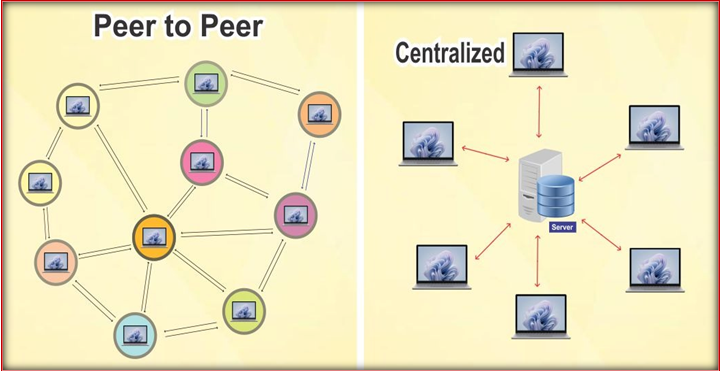
Fig. 1: Blockchains storage process peer to peer network vs centralized network
The blockchain storage process
Snippets of data
It includes segmenting the data into smaller, more manageable pieces that can be shared across several nodes. In a blockchain network, files or data are distributed across a decentralised network of computers known as nodes. Each node maintains a copy of the blockchain, ensuring the network's security, transparency, and resilience [14].
Every snippets should be encoded
Each data shard on the local system is subsequently encoded by the storage system. The owner of the content has total authority over this procedure. No matter where the data is located or whether it is in circulation or at rest, the aim is to guarantee that only the content owner can view or access the data in a shard [15].
Make a digital fingerprint for every snippet
Digital fingerprints generated by a blockchain storage system refer to unique cryptographic identifiers that summarize and verify data integrity. These "fingerprints" are typically hash values created using cryptographic hash functions like SHA-256. Here's how they work in the context of blockchain storage:
To create a duplicate of every snippet
Every fragment has been copied by the storage system to provide enough multiple copies to assure reliability, accessibility, and integrity while safeguarding against deterioration and data loss [16].
Transfer of duplicate snippet
The replicated shards are distributed, either locally or internationally, to storage nodes that are spread out geographically via a P2P network. Several companies or people [17]. The storage infrastructure is not owned or controlled by a single firm. Regardless of the location of such nodes, only content owners have complete access to all of their data.
Lastly, data is transferred to the ledger
The blockchain ledger's storage mechanism keeps track of every transaction and synchronises it with every node. All nodes (computers or devices participating in the blockchain network) maintain a copy of the blockchain ledger. Through consensus mechanisms, these nodes ensure that their copies are consistent with one another [18].
Blockchain: transformative force in India's growth story
Blockchain technology is becoming a transformative force in India's growth story, paving the way for innovation across industries, traceability, enhancing transparency, and fostering economic development. As a decentralized and secure ledger system, blockchain has the potential to address key challenges and unlock opportunities across sectors such as Enhancing Financial Inclusion, revolutionizing supply chains, healthcare, transforming Governance, Boosting Renewable Energy Adoption, Strengthening cybersecurity and agriculture [19].
Given its revolutionary potential, the Indian government is actively constructing a national blockchain infrastructure and has set the lofty goal of making "Make in India" blockchain available for usage globally in the upcoming five years. By 2026, blockchain use in India may have risen to a staggering 46%. According to experts, the government intends to create the National Blockchain Portal. Building a national-level blockchain infrastructure under the National Blockchain Framework is a major step India has taken towards using blockchain [20].
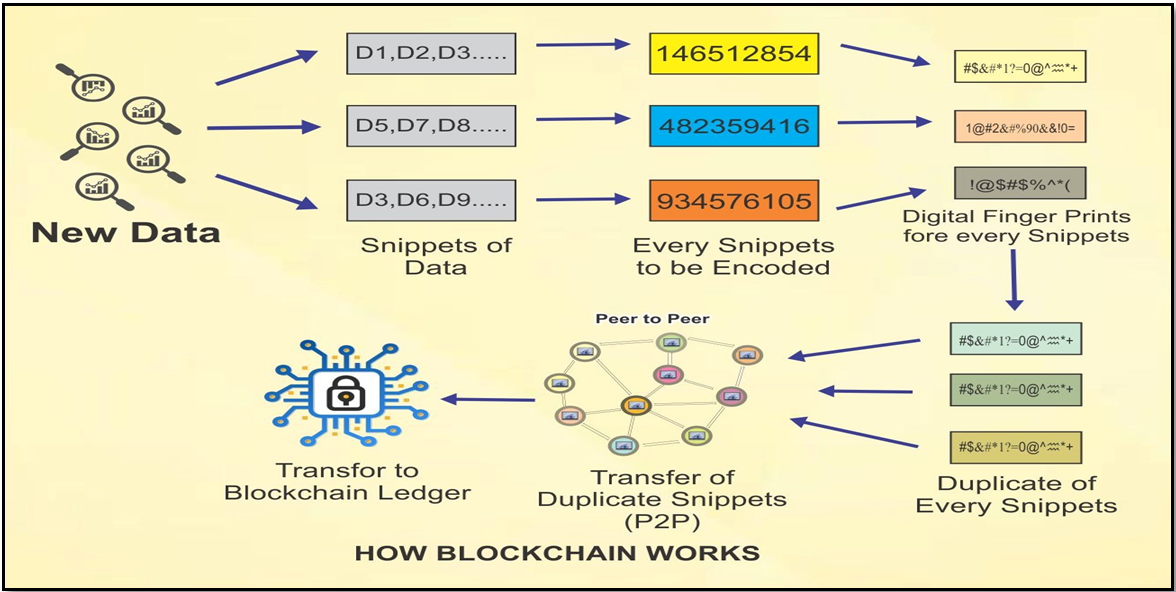
Fig. 2: Blockchains storage process
Centre of excellence in blockchain technology
On January 18, 2020, Govt of India officially inaugurated the Centre of Excellence in Blockchain Technology in Bengaluru, Karnataka. The event was conducted via video conferencing from Delhi. This center, established by the National Informatics Centre (NIC), was designed to drive research, development, and adoption of blockchain technology in governance and public service delivery. The center aimed to provide a platform for exploring blockchain solutions for improving transparency, efficiency, and trust in various government services [21].
Blockchain network features
Blockchain technology has several distinctive features that make it revolutionary for various applications. Here are the main features of blockchain:
I. Decentralized
The term decentralized refers to the way blockchain operates: it functions without a single controlling entity or centralized server. Instead, the ledger is maintained by a network of nodes (computers) spread across the globe. A blockchain is a decentralized, distributed ledger technology (DLT) designed to securely record, verify, and share information across a network of participants without relying on a central authority [22]. We may keep our assets on the system and access it directly from the web because it doesn't need any regulating bodies.
II. Immutability
Immutable refers to anything that cannot be modified or altered. The permanent, unalterable nature of blockchain systems is one of their best features. Since the system is distributed, every node has a copy of the digital ledger. When a transaction is added, each node has to confirm its validity. If the majority is in consensus that it is legitimate, it is recorded in the ledger. It makes it robust to corruption and encourages transparency. Transaction blocks cannot be added to the ledger without the majority of nodes' consent. Once the transaction blocks are entered into the ledger, they cannot be changed [23].
III. Enhanced security
The decentralised nature of blockchain, combined with cryptographic hashing, makes it highly secure and resistant to tampering. Without a central authority, no single entity can arbitrarily modify the rules or data within the blockchain. Any change requires agreement from the majority of participants in the network, ensuring fairness and preventing unilateral decisions. Each block of data is hashed using cryptographic algorithms (e. g., SHA-256). A hash is a unique fixed-size string generated from the block's data, acting like its fingerprint. To modify a single block, an attacker would need to recalculate the hashes of all subsequent blocks, which is computationally infeasible on large, distributed networks [24]. Changing the data would require control over at least 51% of the network's computational power in most blockchains, making tampering prohibitively expensive.
IV. Distributed ledgers
Every detail regarding a transaction and the participant nodes will be available in a public ledger. The ledger's actual activity is accessible to a large number of people. Every single user on the system is in control of keeping the network ledger up to date. When there is tampering or dubious activity, the distributed ledger responds quite well. Nodes serve as the ledger's verifiers. The transaction must be validated by others users before a user's request to add a new block can be approved. Updates to the ledger require consensus among participants. Changes to the ledger are synchronized across all nodes in real-time or near-real-time [25].
V. Consensus mechanism
Without a reliable consensus mechanism, blockchain networks could not function effectively. Consensus ensures trust in a trustless environment, making blockchain an ideal solution for applications like cryptocurrencies, supply chain management, and smart contracts. Consensus mechanisms validate transactions and blocks, ensuring that only legitimate data is added to the blockchain [26]. This prevents issues like double-spending in cryptocurrencies. In the absence of a central authority, consensus provides a decentralised way for nodes to trust and verify each other. Consensus mechanisms are designed to handle malicious actors, ensuring the network remains functional even with some compromised nodes.
Benefits of blockchain in the healthcare industry
Supply chain management
Blockchain can track drug transactions from raw materials to consumers, and provide a transparent record that's accessible to all stakeholders. Blockchain-based pharmaceutical management provides an additional way to create and monitor the supply chain from the manufacturer to the customer. Supply chain management (SCM) involves a network of suppliers, manufacturers, distributors, retailers, and logistics providers working together to ensure goods or services are delivered efficiently, cost-effectively, and with high quality [27, 28].
Cold chain monitoring
Cold Chain Monitoring refers to the process of maintaining and tracking the temperature of temperature-sensitive products throughout their supply chain, from production to storage and distribution, ensuring that they remain within prescribed temperature ranges. It is crucial for industries like pharmaceuticals, food, and chemicals, where product quality, safety, and efficacy depend on strict temperature controls. Blockchain can be integrated with real-time location tracking and IoT devices to monitor temperature in real time, ensuring the integrity of cold chain shipments. This can help to prevent contamination of temperature-sensitive products [29].
Monitor counterfeit drugs
Blockchain offers a promising solution for monitoring and combating counterfeit drugs in the pharmaceutical supply cha. Blockchain can store digital certificates that confirm a drug's authenticity, origin, and compliance with regulatory standards. Blockchain's traceability features can make it difficult for counterfeit drugs to enter the supply chain. Counterfeit drugs are fake medicines that are deliberately mislabelled to deceive consumers. These drugs may contain incorrect or harmful ingredients, insufficient active ingredients, or no active ingredients at all [30]. They pose serious health risks and can lead to treatment failure, worsening of disease, or even death. Regulators can use blockchain to monitor the rate at which counterfeit drugs enter the supply chain.
Patient safety
Blockchain can create tamper-proof, immutable medical records, ensuring data integrity and reducing errors caused by fragmented or altered information. When necessary, patients can authorise access to healthcare providers by exercising control over their health data, which minimizes risks associated with outdated or incomplete medical records. Blockchain-based systems can provide a decentralized, trusted platform for reporting medical errors or adverse drug events. This encourages timely and accurate reporting, which is crucial for identifying trends and improving safety protocols. Blockchain can help to increase patient safety by providing real-time tracking and data transparency. Blockchain improves comprehensive patient safety in medical care, solves issues with medical treatments traceability and validity, and permits secure interconnectivity. Because Blockchain technology integrates seamlessly, doctors will have easy access to comprehensive medical records, which will improve operational efficiency and help with diagnosis [31].
Smart contracts
A smart contract is an autonomous software application that runs on a blockchain and autonomously carries out operations or enforces contracts in response to present criteria. By removing the need for middlemen, smart contracts allow for decentralised, trustless transactions and processes. They are written in programming languages compatible with the blockchain they're deployed on, such as Solidity (for Ethereum). Blockchain can be used to create smart contracts that guarantee the rights of manufacturers, distributors, and consumers [32].
Save a patient's personal information
Using blockchain technology to store a patient’s personal information involves balancing the principles of security, privacy, and decentralisation with the sensitivity of medical data. The patient's name, date of birth, screening, lab results, prescription drugs, and ambulatory history are all documented by a medical professional. Using blockchain to store a patient’s personal information can enhance data security, integrity, and accessibility it Allow patients to control who can access their information by granting or revoking permissions via a digital wallet or secure application. Store actual sensitive patient data off-chain in encrypted databases or IPFS (Inter Planetary File System) for scalability and security. A patient visits a clinic, and their medical history is retrieved via a blockchain-based system. The contemporary databases, or cloud computing, are where this data is kept. Integrate decentralised identifiers (DIDs) for unique and secure patient identification without revealing personal details [33].
Decentralized clinical study
Blockchain technology offers a safe, transparent, and impenetrable method of data management that has the ability to completely transform clinical trials. Blockchain technology can guarantee that trials are carried out in a transparent and ethical way. Two important clinical trial recruitment activities can be handled by blockchain technology. In order to quickly and effectively reach the appropriate patient demographic, it can first assist sponsors with patient recruitment. HGTF4RZ Blockchain is used in clinical trials to address problems with data fragmentation and misleading results that don't match the study's aims and objectives. Researchers, sponsors, and regulators can access data instantly, accelerating the trial process and enhancing decision-making. Preserving secure data to expedite clinical trials and, eventually, reduce the expenses associated with drug development. It keeps track of all data changes and transactions, which lowers the possibility of data tampering and guarantees the accuracy of the results. Blockchain technology generates an unchangeable audit trail that can be utilised to confirm the authenticity of data. Blockchain's tamper-proof nature ensures the integrity of clinical trial data, preventing manipulation and fostering trust among stakeholders [34].
Accountability and security
It allows doctors to spend more time treating patients while offering unparalleled security and clarity. Supporting clinical trials and treatments for any uncommon condition would also be possible. In a healthcare system, seamless data sharing amongst medical solution providers can support accurate diagnosis, successful treatments, and economically viable ecosystems [35].
Patient monitoring
Medical personnel can trust a blockchain to ensure they have access to medical equipment when necessary. .Observing patients and addressing health-related occurrences remotely may require extra time from physicians. Building a stable online identity for healthcare providers and institutions through a blockchain healthcare network. Regulating patient room temperatures, bed usage, and supply availability can all be simplified with blockchain technology in hospitals. Blockchain systems and the Internet of Things (IoT) can both improve supply chain tracking and flexibility, as well as boost transparency in medical logistics for proper patient monitoring. The blockchain uses cryptographic hashing for all of its data. Therefore, attempting to alter or tamper with the data is not possible [36, 37].
Lower unnecessary administrative costs
Blockchain technology may be the best option for keeping medical records. Blockchain eliminates the need for middlemen like banks, brokers, or clearinghouses by facilitating peer-to-peer transactions. This reduces costs associated with third-party services. A decentralised ledger allows real-time updates and verification of transactions, minimising delays and inefficiencies, such as those in supply chain operations or financial settlements. Blockchain eliminates the need to maintain multiple databases and reduces the expenses associated with data reconciliation and duplication by sharing a single, immutable ledger among authorised participants. With blockchain technology in healthcare, the service providers will already have a summary of each patient's medical history. This technology can overcome a number of issues, such as theft, report finalisation, interoperability, and even catastrophic data failure [38].
Maintaining medical records
Using blockchain technology for maintaining medical records is a promising innovation that offers several benefits, including enhanced security, data integrity, and patient control. Blockchain could be the perfect tool for keeping medical records. Blockchain will compile all of the data and provide patients access to historical records. Sharing medical information, maintaining digitised medical records, handling insurance, and handling administrative duties are some of its uses. A blockchain network can receive health information from patients through an app. On the basis of digital blockchain contracts, sensors and intelligent devices can work together. Blockchain can provide healthcare providers instant access to a patient's medical history, especially in emergencies, improving the speed and quality of care. Blockchain can help ensure compliance with healthcare regulations like HIPAA or GDPR by securely handling sensitive data. By linking medical records to blockchain, insurance claims can be automated and verified quickly, reducing fraud and administrative costs. Thus, the blockchain concept would protect users' privacy and guarantee that the data is genuine and real [39, 40].
Create research initiatives
Creating a blockchain-based solution for pharmaceutical research initiatives involves designing a system to enhance transparency, collaboration, and data security. Blockchain technology can help guarantee the accuracy of data that has been published. Blockchain help Facilitate partnerships among pharmaceutical companies, researchers, and regulatory bodies. Securely share preclinical and clinical data among stakeholders to accelerate RandD. Streamline submission processes with immutable, time-stamped records for audits. A valid information source may be made possible by blockchains. It can expedite the development of drugs by facilitating reliable data sharing and preventing duplication of work. Decentralised publishing platforms on the blockchain can reduce costs and increase accessibility. By using cryptographic hashing, blockchain ensures that data is tamper-proof, making it reliable for collaborative research. Blockchain records can simplify regulatory compliance by providing clear audit trails and accelerating approval processes [41].
Keep financial and other record in pharmaceutical industry
Blockchain technology can assist by preserving the profit and loss statement, or income statement. Tracks income from services like patient care, diagnostics, and surgeries. Highlights operating and non-operating expenses (e. g., staff salaries, utilities, supplies). Key assets: cash, accounts receivable, inventory (medications, medical supplies), property, and equipment. Track all financial activities, including patient billing, insurance claims, donations, and grants. Blockchain technology could be tremendously beneficial to the pharmaceutical industry in maintaining financial records. Blockchain can help with a number of issues, such as data integrity, compliance, and operational efficiency, by utilising its qualities of transparency, immutability, and security. Every transaction is cryptographically secured in a tamper-proof ledger created by blockchain [42]. It is impossible to change previous records since all financial statement adjustments are documented in a form that maintains audit trails. By simplifying procedures and lowering the possibility of mistakes, blockchain lowers the costs related to manual reconciliation, audits, and compliance. Use permissioned blockchains to control access to sensitive financial information. Blockchains have the ability to completely transform pharmaceutical finance administration by improving process security, transparency, and efficiency. It can handle a number of the particular difficulties faced by the sector with the appropriate executing plan [43].
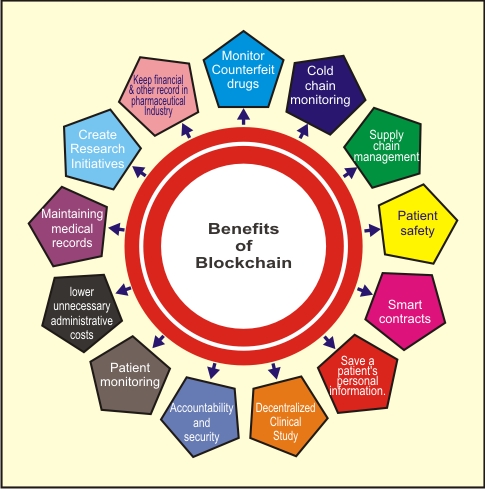
Fig. 3: Benefits of blockchain technology
Blockchains technology's potential risks in the medical field
Blockchain technology has many advantages for the medical industry, including better patient privacy, more interoperability, and safe data sharing. But there are also a number of possible hazards that need to be taken into account [44].
Data privacy and security risks
Immutability of Data: Blockchain’s immutability means that once data is recorded, it cannot be altered. If sensitive medical information is mistakenly added or compromised, it becomes permanently stored, which could lead to compliance issues with regulations like HIPAA or GDPR. De-anonymization Risks: Even with pseudonymization, there is a risk that patient data could be re-identified through sophisticated analytical methods or data correlation [45, 46].
Scalability and performance issues
Data Volume: Medical data, especially imaging or genomic data, can be very large. Storing such data directly on the blockchain may lead to performance issues. Real-time medical applications may face delays due to blockchain’s consensus mechanisms.
Compliance and regulatory challenges
Lack of Standardization: The medical field often lacks standardized protocols for blockchain implementation, leading to fragmented solutions that might not comply with all regulations.
Jurisdictional Issues: Different countries have varying laws on data privacy and blockchain use, making global adoption difficult.
Cost and resource intensity
Infrastructure Costs: Implementing blockchain solutions can be expensive, requiring substantial computational power and energy, especially for public blockchains.
Maintenance: Upgrading and maintaining blockchain networks can be resource-intensive and costly [47].
Governance and accountability
Disputes and Errors: Decentralized systems lack clear governance structures, making it difficult to resolve disputes or correct errors.
Control Issues: Determining who has access and control over the blockchain can be complex, especially in multi-stakeholder systems.
Misuse and ethical concerns
Ethical issues like data ownership and consent.
Fraudulent Activities: While blockchain is secure, it is not immune to fraudulent smart contracts or malicious actors exploiting vulnerabilities [48].
Exclusion Risk: Poorly implemented blockchain solutions could exclude underprivileged or less tech-savvy patients from accessing medical services.
Technology immaturity
Interoperability Issues-Many blockchain solutions are not yet fully compatible with existing medical systems, leading to integration challenges.
Evolving Standards-Rapid changes in blockchain technology could render early implementations obsolete [49].
Mitigation strategies
Conduct comprehensive risk assessments before deploying blockchain solutions. Implement robust encryption and privacy-preserving techniques, such as zero-knowledge proofs. Focus on hybrid models that combine blockchain with traditional secure databases. Develop clear governance frameworks and compliance standards. Pilot solutions in controlled environments before scaling. Store sensitive data off-chain and include only cryptographic hashes or references on the blockchain [50]. Use advanced encryption techniques to secure data. Design systems aligned with local and international healthcare regulations. Implement second-layer solutions like side chains or state channels for faster processing. Promote the adoption of industry standards for data exchange, such as FHIR (Fast Healthcare Interoperability Resources). Use cloud-based solutions to reduce upfront infrastructure costs. Provide education and training for stakeholders on blockchain benefits and use cases. Develop intuitive user interfaces to reduce the learning curve. Pilot Projects: Start with pilot programs to demonstrate value and build trust [51]. Proactive Engagement: Work with regulators to develop compliant systems. Legal Audits: Regularly audit blockchain systems to ensure regulatory compliance. Ethics Committees: Involve ethics committees in the development process.
CONCLUSION
Blockchain technology represents transformative innovation with far-reaching implications across industries. It has the potential to revolutionise the healthcare industry by addressing critical challenges such as data security, interoperability and transparency. Blockchain technology has the potential to greatly enhance data integrity, patient safety and pharmaceutical supply chain management. By enabling real-time tracking of drug shipments, it combats counterfeit medicines; ensuring only genuine products reach patients. Smart contracts streamline processes such as prescription management, billing, and compliance, reducing errors and administrative overhead. Adopting blockchain in pharmacy aligns with the industry's goals of optimising operations, adhering to regulatory requirements, and improving patient outcomes. However, it also presents certain risks that must be understood and addressed to ensure its effective implementation while maintaining patient safety, privacy, and data integrity.
FUNDING
The project has not received financial support from any funding Agency
AUTHORS CONTRIBUTIONS
All authors equally contributed in the literature survey and preparation of manuscript.
Mr. Sanjay Kumar Gupta: Planned and designed the concept of the manuscript, designing the final version to be published, Dr. Uttam Prasad Panigrahy: Reviewing the manuscript. Dr. Fazlu Rehman: Supported in designing, drafting the manuscript, literature search and review and Dr. A Rajesh: Supported in literature search, review, drafting the manuscript.
CONFLICTS OF INTERESTS
There is no conflict of interest among authors
REFERENCES
Yuan WX, Yan B, Li W, Hao LY, Yang HM. Blockchain-based medical health record access control scheme with efficient protection mechanism and patient control. Multimed Tools Appl. 2023;82(11):16279-300. doi: 10.1007/s11042-022-14023-3, PMID 36404935.
Saini K, Singh JN, editors. Blockchain and IoT approaches for secure electronic health records (EHR). IGI Global; 2024. doi: 10.4018/979-8-3693-1662-7.
Haughton O, Campbell C, Howe G, Walcott TH. Evaluating the Integration of Blockchain Technologies in Supply Chain Management: a case study of sustainable fishing International Conference on Computing, Networking, Telecommunications and Engineering Sciences Applications (CoNTESA), Skopje, North Macedonia; 2022. p. 51-6. doi: 10.1109/CoNTESA57046.2022.10011252.
Dobbelstein T, Sinemus K, Zielke S. Gamified promotions in shopping apps: the role of regret and its impact on purchase intention 29th Recent Advances in Retailing and Consumer Science Conference; 2023.
Sigwart M, Borkowski M, Peise M, Schulte S, Tai S. Blockchain-based data provenance for the internet of things. In: Proceedings of the 9th International Conference on the Internet of Things Bilbao Spain. New York, USA: ACM; 2019. p. 1-8. doi: 10.1145/3365871.3365886.
Ali MS, Vecchio M, Pincheira M, Dolui K, Antonelli F, Rehmani MH. Applications of blockchains in the internet of things: a comprehensive survey. IEEE Commun Surv Tutorials. 2019;21(2):1676-717. doi: 10.1109/COMST.2018.2886932.
Haleem A, Javaid M, Singh RP, Suman R, Rab S. Blockchain technology applications in healthcare: an overview. International Journal of Intelligent Networks. 2021;2:130-9. doi: 10.1016/j.ijin.2021.09.005.
Kuo TT, Kim HE, Ohno Machado L. Blockchain distributed ledger technologies for biomedical and health care applications. J Am Med Inform Assoc. 2017;24(6):1211-20. doi: 10.1093/jamia/ocx068, PMID 29016974.
Quinn J, Connolly B. Distributed ledger technology and property registers: displacement or status quo. Law Innov Technol. 2021;13(2):377-97. doi: 10.1080/17579961.2021.1977223.
Mozumder MA, Armand TP, Imtiyaj Uddin SM, Athar A, Sumon RI, Hussain A. Metaverse for digital anti-aging healthcare: an overview of potential use cases based on artificial intelligence blockchain IoT technologies its challenges and future directions. Appl Sci. 2023;13(8):5127. doi: 10.3390/app13085127.
Abu Elezz I, Hassan A, Nazeemudeen A, Househ M, Abd Alrazaq A. The benefits and threats of blockchain technology in healthcare: a scoping review. Int J Med Inform. 2020 Oct;142:104246. doi: 10.1016/j.ijmedinf.2020.104246, PMID 32828033.
Milne AJM, Beckmann A, Kumar P. Cyber-physical trust systems driven by blockchain. IEEE Access. 2020;8:66423-37. doi: 10.1109/ACCESS.2020.2984675.
Mikula T, Jacobsen RH. Identity and access management with blockchain in electronic healthcare records 21st Euromicro Conference on Digital System Design (DSD), Prague, Czech Republic; 2018. p. 699-706. doi: 10.1109/DSD.2018.00008.
Mazlan AA, Mohd Daud S, Mohd Sam S, Abas H, Abdul Rasid SZ, Yusof MF. Scalability challenges in healthcare blockchain system a systematic review. IEEE Access. 2020;8:23663-73. doi: 10.1109/ACCESS.2020.2969230.
Owen R, Mac An Bhaird C, Hussain J, Botelho T. Blockchain and other innovations in entrepreneurial finance: implications for future policy. Strateg Change. 2019;28(1):5-8. doi: 10.1002/jsc.2250.
Khordadpour P. Proposed smart 5G framework: incorporating federated learning and transfer learning. TechRxiv. doi: 10.36227/techrxiv.22814831.
Ray PP, Dash D, Salah K, Kumar N. Blockchain for IoT-based healthcare: background consensus platforms and use cases. IEEE Syst J. 2021;15(1):85-94. doi: 10.1109/JSYST.2020.2963840.
Meit Y. Centre for excellence in blockchain, centre for excellence in blockchain; 2024. Available from: https://blockchain.gov.in/home/home. [Last accessed on 10 Apr 2024].
Vyas S, Shukla VK, Gupta S, Prasad A, editors. Blockchain technology: exploring opportunities challenges and applications. Boca Raton: CRC Press; 2022. doi: 10.1201/9781003138082.
Blockchain and healthcare: use cases today and opportunities for the future. Available from: www.https.com/blog/blockchain-and-healthcare-use-cases-today-and-in-the-future.
Shah B. Remodeling the healthcare industry by employing blockchain technology. 2018 International Conference on Circuits and Systems in Digital Enterprise Technology (ICCSDET). IEEE; 2018. doi: 10.1109/ICCSDET.2018.8821113.
Beinke JH, Fitte C, Teuteberg F. Towards a stakeholder-oriented blockchain-based architecture for electronic health records: design science research study. J Med Internet Res. 2019;21(10):e13585. doi: 10.2196/13585, PMID 31593548.
Gordon WJ, Catalini C. Blockchain technology for healthcare: facilitating the transition to patient-driven interoperability. Comp Struct Biotechnol J. 2018;16:224-30. doi: 10.1016/j.csbj.2018.06.003, PMID 30069284.
Elango V, MM, Vetrivel K, MY, Nikam KD. 3d printing in the pharmaceutical industry: a special consideration on medical device and its applications. Int J Appl Pharm. 2025;17(1):1-11. doi: 10.22159/ijap.2025v17i1.52354.
Haq I, Muselemu O. Blockchain technology in pharmaceutical industry to prevent counterfeit drugs. IJCA. 2018;180(25):8-12. doi: 10.5120/ijca2018916579.
Kumar R, Wang W, Kumar J, Yang T, Khan A, Ali W. An integration of blockchain and AI for secure data sharing and detection of CT images for the hospitals. Comput Med Imaging Graph. 2021;87:101812. doi: 10.1016/j.compmedimag.2020.101812, PMID 33279761.
Ismail L, Materwala H, Hennebelle A. A scoping review of integrated blockchain cloud (BcC) architecture for healthcare: applications challenges and solutions. Sensors (Basel, Switzerland). 2021;21(11):3753. doi: 10.3390/s21113753, PMID 34071449.
Kumar R, Marchang N, Tripathi R. Distributed off-chain storage of patient diagnostic reports in healthcare system using IPFS and blockchain International Conference on Communication Systems and Networks (COMSNETS). IEEE; 2020. doi: 10.1109/COMSNETS48256.2020.9027313.
Esposito C, De Santis A, Tortora G, Chang H, Choo KK. Blockchain: a panacea for healthcare cloud based data security and privacy? IEEE Cloud Comput. 2018;5(1):31-7. doi: 10.1109/MCC.2018.011791712.
Abdellatif AA, Al Marridi AZ, Mohamed A, Erbad A, Chiasserini CF, Refaey A. ssHealth: toward secure blockchain-enabled healthcare systems. IEEE Netw. 2020 Jul-Aug;34(4):312-9. doi: 10.1109/MNET.011.1900553.
Nugent T, Upton D, Cimpoesu M. Improving data transparency in clinical trials using blockchain smart contracts. F1000Res. 2016;5:2541. doi: 10.12688/f1000research.9756.1, PMID 28357041.
Cohen DJ, Keller SR, Hayes GR, Dorr DA, Ash JS, Sittig DF. Integrating patient generated health data into clinical care settings or clinical decision making: lessons learned from project health design. JMIR Hum Factors. 2016 Oct 19;3(2):e26. doi: 10.2196/humanfactors.5919, PMID 27760726.
Maslove DM, Klein J, Brohman K, Martin P. Using blockchain technology to manage clinical trials data: a proof of concept study. JMIR Med Inform. 2018 Dec 21;6(4):e11949. doi: 10.2196/11949, PMID 30578196.
Griggs KN, Ossipova O, Kohlios CP, Baccarini AN, Howson EA, Hayajneh T. Healthcare blockchain system using smart contracts for secure automated remote patient monitoring. J Med Syst. 2018 Jun 6;42(7):130. doi: 10.1007/s10916-018-0982-x, PMID 29876661.
Ranganthan VP, Dantu R, Paul A, Mears P, Morozov K. A decentralized marketplace application on the Ethereum blockchain 4th International Conference on Collaboration and Internet Computing. IEEE; 2018. p. 90-7. doi: 10.1109/CIC.2018.00023.
Bhuvana R, Madhushree LM, Aithal PS. Blockchain as a disruptive technology in healthcare and financial services a review based analysis on current implementations. Int J Appl Eng Manag Lett (IJAEML). 2020;4(1):142-55. doi: 10.5281/zenodo.3822463.
Dubovitskaya A, Xu Z, Ryu S, Schumacher M, Wang F. Secure and trustable electronic medical records sharing using blockchain. AMIA Annu Symp Proc. 2017;2017:650-9. PMID 29854130.
Gupta SK, Patra S. Development characterization and pharmacokinetic evaluation of optimized vildagliptin sustained release matrix tablet using box-behnken design. Int J App Pharm. 2024;16(1):214-33. doi: 10.22159/ijap.2024v16i1.48052.
Rajagopal S, Angamuthu G, Rajagopal S, Angamuthu G, Dhandapani NV. Revolutionizing drug development: how ai and machine learning are shaping the future of medicine a review. Int J App Pharm. 2025 Mar;17(3):148-56. doi: 10.22159/Ijap.2025v17i3.53457.
Linn LA, Koo MB. Blockchain for health data and its potential use in health IT and health care-related research. ONC/NIST use of blockchain for healthcare and research workshop. Gaithersburg, MD: ONC/NIST; 2016.
Ekblaw A, Azaria A, Halamka JD, Lippman A. A case study for blockchain in healthcare: “MedRec” prototype for electronic health records and medical research data. Use of Blockchain for Healthcare and Research Workshop; 2016.
Siyal AA, Junejo AZ, Zawish M, Ahmed K, Khalil A, Soursou G. Applications of blockchain technology in medicine and healthcare: challenges and future perspectives. Cryptography. 2019;3(1):3. doi: 10.3390/cryptography3010003.
Zheng X, Sun S, Mukkamala RR, Vatrapu R, Ordieres Mere J. Accelerating health data sharing: a solution based on the internet of things and distributed ledger technologies. J Med Internet Res. 2019;21(6):e13583. doi: 10.2196/13583, PMID 31172963.
Dinc R, Ardic N. An evaluation of opportunities and challenges of blockchain technology in healthcare. Br J Hosp Med. 2024;85(11):1-19. doi: 10.12968/hmed.2024.0355.
Kassab M, De Franco J, Malas T, Graciano Neto VV, Destefanis G. Blockchain: a panacea for electronic health records? 1st International Workshop on Software Engineering for Healthcare (SEH). IEEE; 2019. doi: 10.1109/SEH.2019.00011.
Kuo TT, Gabriel RA, Ohno Machado L. Fair compute loads enabled by blockchain: sharing models by alternating client and server roles. J Am Med Inform Assoc. 2019 May;26(5):392-403. doi: 10.1093/jamia/ocy180, PMID 30892656.
Kumar Gupta SK, Patra S. Preparation, characterization and optimization of sustained release matrix tablets of repaglinide using box–behnken design. Res J Pharm Technol. 2023;16(5):2403-10. doi: 10.52711/0974-360X.2023.00396.
Rabah K. Challenges and opportunities for blockchain-powered healthcare systems: a review. Mara Res J Med Health Sci. 2017;1(1):45-52.
Sarkar S. Blockchain for combating pharmaceutical drug counterfeiting and cold chain distribution. AJRCoS. 2023;16(3):156-66. doi: 10.9734/ajrcos/2023/v16i3353.
Dubovitskaya A, Novotny P, Xu Z, Wang F. Applications of blockchain technology for data-sharing in oncology: results from a systematic literature review. Oncology. 2020;98(6):403-11. doi: 10.1159/000504325, PMID 31794967.
Justinia T. Blockchain technologies: opportunities for solving real world problems in healthcare and biomedical sciences. Acta Inform Med. 2019;27(4):284-91. doi: 10.5455/aim.2019.27.284-291, PMID 32055097.