
Int J Pharm Pharm Sci, Vol 17, Issue 10, 23-26Original Article
ACTIVITY OF CYMBOPOGON CITRATUS (DC.) STAPF AND OCIMUM GRATISSIMUM L. ESSENTIAL OILS AGAINST ORAL PATHOGENS
NORBERT G. ANYAMA1*, FRANCIS OCHENG2, ANNE AMPAIRE3, ISAAC OKULLO2
1Department of Pharmacy, School of Health Sciences, College of Health Sciences, Makerere University-7072, Kampala, Uganda. 2School of Dentistry, College of Health Sciences, Makerere University-7072, Kampala, Uganda. 3Department of Ophthalmology, School of Medicine, College of Health Sciences, Makerere University-7072, Kampala, Uganda
*Corresponding author: Norbert G. Anyama; *Email: nganyama1@gmail.com
Received: 13 May 2025, Revised and Accepted: 07 Aug 2025
ABSTRACT
Objective: To test the antimicrobial activity of the essential oils of Cymbopogon citratus and Ocimum gratissimum against oral pathogens.
Methods: The essential oils of C. ctratus and O. gratissimum were analysed for their chemical components using Gas Chromatography Mass Spectrometry (GC-MS) and tested for antimicrobial activity against Streptococcus mutans, Porphyromonas gingivalis and Lactobacillus acidophilus. The essential oils of C. citratus and O. gratissimum were tested for antimicrobial activity using broth dilution at concentrations of 0.1% v/v and 0.25%v/v, in two sets of experiments. Combinations of the two essential oils at concentrations of 0.15%v/v/0.15%v/v and 0.25%v/v/0.25%v/v were also tested.
Results: C. citratus was active at a concentration of 0.25% v/v against L. acidophilus. O. gratissimum oil showed activity against all three oral pathogens at concentrations of 0.1% v/v and 0.25% v/v. The combinations of C. citratus and O. gratissimum oils at concentrations of 0.1% v/v/0.1%v/v and 0.25%v/v/0.25%v/v were found to be active against all three pathogens, with activities comparable to those of Listerine and Carsodyl mouthwashes.
Conclusion: Findings show that the essential oils of C. citratus and O. gratissimum are active against oral pathogens.
Keywords: Cymbopogon citratus, Ocimum gratissimum, Antimicrobial activity, Dental caries, Periodontal disease
© 2025 The Authors. Published by Innovare Academic Sciences Pvt Ltd. This is an open access article under the CC BY license (https://creativecommons.org/licenses/by/4.0/)
DOI: https://dx.doi.org/10.22159/ijpps.2025v17i10.55019 Journal homepage: https://innovareacademics.in/journals/index.php/ijpps
INTRODUCTION
Oral health is defined by the World Health Organisation [1] as the state of the mouth, teeth and orofacial structures that enables individuals to perform essential functions like eating, breathing and speaking, and encompasses psychosocial dimensions, such as self-confidence, well-being and the ability to socialise and work without pain, discomfort and embarrassment.
Oral diseases are amongst the most common diseases. Globally, about 3.5 billion people are afflicted with oral diseases mostly in low and middle-income countries. The most common oral diseases are dental caries of permanent teeth with about 2 billion cases and periodontal disease with about 1 billion cases. The prevalence of caries of permanent teeth in the African region is estimated at 28.5 percent. The main pathogens that cause periodontal disease are Aggregatibacter actinomycetemcomitans, Prevotella intermedia, Porphyromonas gingivalis, Treponema denticola, and Tannerella forsynthesis [2]. However, oral diseases do not exist in isolation. They have been found to occur in association with cardiovascular diseases, diabetes mellitus, lung diseases and obstetric complications [3]. Zeng et al. [4] found the plaque index and gingival index scores to be significantly higher in stroke patients, indicating worse periodontal status. Stroke patients were found to have poorer overall health status compared to their controls.
The risk factors for oral diseases are also those of other non communicable diseases. Oral health surveys are important in tracking trends in the oral health profile as well as in producing valid indicators for use in health services [5]. Oral health-related quality of life has been used as a measure of the impact of oral diseases on individuals, society and populations [6]. In a study by Chaffee et al. [7] in Brazil, increasing child caries experiences were found to be associated with worsening child and family quality of life, regardless of family socioeconomic status. In a study among institutionalised residents in Hongkong, gum, teeth, mucosa and denture problems were found to be prevalent and were associated with poor oral health-related quality of life [8]. Patient-reported outcomes have also become important in the evaluation of oral health, with patient-reported outcome measures or instruments being used to assess treatment outcomes and patient satisfaction [9].
Various interventions have been tried for the prevention and control of oral diseases. Oral health promotion programmes with a focus on improving oral hygiene, brushing with fluoride toothpaste and improved dietary habits, have been tested in different countries and settings. A systematic review and meta-analysis by Fraihat et al. [10] found that oral health promotion programmes for dental caries prevention were cost-effective, especially for children less than six years of age. Meanwhile, educational interventions performed in health services have been found to result in the improvement of behaviours and outcomes related to oral health. The interventions have been found to reduce the overall occurrence of lesions and of dental carries [11]. A peer-led health education model for elementary school-aged children in Canada [12] was found to improve children’s oral self-care and to reduce the need for professional oral care referrals. Hunter [13] has proposed an updated oral health strategy with an emphasis on prevention, particularly among institutionalised and nursing home residents. Essential oils, including those from C. citratus and O. gratissimum are known to possess antimicrobial activity, which has potential for use in oral health [14-17]. This project was intended to test the antimicrobial activity of C. citratus and O. gratissimum against oral pathogens.
MATERIALS AND METHODS
Design
We carried out an experimental study. We analysed the essential oils of C. ctratus and O. gratissimum for their chemical components and tested them for antimicrobial activity against oral pathogens.
Determination of the essential oil yield and essential oil chemical component profile
Aerial parts of C. citratus and O. gratissimum plants leaves growing in Lango sub-region were identified and collected from Barr and Amach subcounties, in Lira district by a botanist (Nambejja Cissy). The latitude of Lira is 2.258083, and the longitude is 32.887407. The samples were transported to the Natural Chemotherapeutics Research Institute (NCRI) laboratory for extraction of essential oil by steam distillation using a Clevenger apparatus (fig. 1).
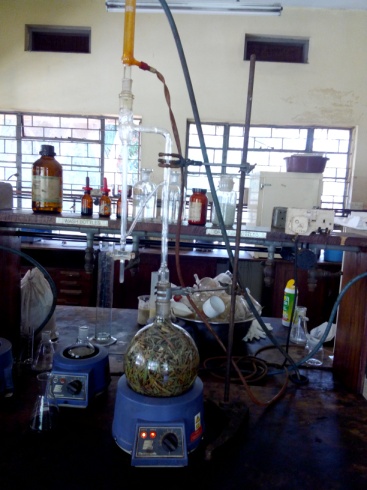
Fig. 1: Steam distillation of C. citratus and O. gratissimum essential oils using the clevenger apparatus
Plant material to be distilled was put into the flask, water was added into the flask and the setup heated on a mantle. The mixture of vapours of water and essential oil passed into the condenser. As the distillation proceeded, the distillate collected in the separator. The oil, being insoluble and lighter than water, floated on the top of the separator and was continuously drawn off. The oil was then poured out and filtered manually or by using chemicals. The essential oils were then analysed using Gas Chromatography Mass Spectrometry (GC-MS) at the Department of Chemistry, Makerere University. A commercial oil sample of C. citratus (Kato) was included in the analysis.
Antimicrobial tests of the essential oils
The essential oils of C. citratus and O. gratissimum were tested for antimicrobial activity using broth dilution at concentrations of 0.1% v/v and 0.25%v/v, in two sets of experiments. Combinations of the two essential oils at concentrations of 0.15%v/v/0.15%v/v and 0.25%v/v/0.25%v/v were also tested. The microorganisms against which the essential oils were tested included Streptococcus mutans, P. gingivalis and Lactobacillus acidophilus, obtained from the College of Veterinary Medicine, Animal Resources and Bio Security (CoVAB). Microorganisms were tested for the ability to produce visible growth in broth containing different dilutions of the test substances. The Minimum Inhibitory Concentration (MIC) and Minimum Bactericidal Concentration (MBC) were determined. The MIC was defined as the lowest concentration of test substance inhibiting growth as judged by visual inspection. The MBC was defined as the lowest concentration of test substance yielding no growth after subculture. The antimicrobial activities were compared to those of Listerine and Carsodyl mouthwashes. Antimicrobial tests were carried out at the Microbiology Laboratory of the College of Veterinary Medicine.
RESULTS
The essential oil yield was 0.625% from C. citratus and 0.3% w/v from O. gratissimum. The chemical profiles of the essential oils of C. citratus and O. gratissimum are shown in tables 1 and 2, respectively. GC-MS analysis revealed the presence of 20 compounds in the C. citratus oil and 15 compounds in the O. gratissimum oil. The most abundant components in the C. citratus oil were neral, the E isomer of citral and geranial the Z isomer in the hexane extract. Meanwhile, eugenol was the predominant component in the essential oil of O. gratissimum.
Table 1: Chemical profile for C. citratus oil samples
| Chemical profile | Retention time | % peak area | ||
| Lira sample extracted by steam distillation | Kato sample from the local market | Sample extracted by hexane | ||
| 5-heptene-2-one, 6 methyl | 13.28 | 17.12 | ||
| Bicyclo (3,1,1) heptanes-6,6 dimethyl. | 13.86 | 19.41 | 6.40 | |
| Limonene | 15.71 | - | 0.83 | - |
| α –pinene | 16.53 | 0.70 | 0.76 | 0.12 |
| 6-octenal, 3,7 –dimethyl- | 24.26 | 7.20 | 1.15 | |
| 2-cyclohexen-1-carboxaldehyde | 26.48 | 4.59 | ||
| 6-octen-1-ol, 3,7 dimethyl | 29.91 | 16.78 | 11.62 | |
| 2,6 Octadienal, 3 7 dimethyl (Z) | 34.43 | |||
| 2,6 Octadiene 1-ol, 3 7 dimethyl- | 32.01 | 8.11 | 31.60 | |
| 2,6 Octadienal, 3 7 dimethyl (E) | 32.57 | 49.07 | 4.60 | 44.04 |
| 2,6,octadiene-1-ol, 3,7 dimethyl acetate (Z) | 34.52 | 4.04 | ||
| Eugenol | 37.92 | 0.12 | 0.63 | - |
| Copaene | 38.81 | 1.04 | 0.30 | - |
| Geranic acid | 38.97 | 0.37 | - | 0.13 |
| 2,6,octadiene-1-ol, 3,7 dimethyl acetate (E) | 39.74 | 2.85 | ||
| Caryophyllene | 41.44 | 0.37 | 0.43 | 0.08 |
| α – Caryophyllene | 43.51 | 0.25 | 0.50 | - |
| 1-H-cyclopropa (a) naphthalene | 47.33 | 4.08 | ||
| Cedrol | 52.12 | 2.18 | ||
| Globulol | 53.19 | 0.24 | ||
The antimicrobial activities of C. citratus and O. gratissimum against oral pathogens are shown in tables 3 and 4. C. citratus was not active at a concentration of 0.1% v/v. However, at 0.25% v/v, it showed activity against L. acidophilus. Meanwhile, O. gratissimum oil showed activity against all three oral pathogens at concentrations of 0.1% v/v and 0.25% v/v. The combinations of C. citratus and O. gratissimum oils at concentrations of 0.1% v/v/0.1%v/v and 0.25%v/v/0.25%v/v were also found to be active against all three pathogens, with activities comparable to those of Listerine and Carsodyl mouthwashes.
Table 2: Chemical profile of essential oil of O. gratissimum
| Chemical profile | Retention time | % peak area |
| Limonene | ||
| α –phellandrene | ||
| α –pinene | 9.90 | 0.17 |
| Camphene | 10.75 | |
| β – myrene | 13.44 | |
| (+) 4 carene | 14.89 | 0.25 |
| 1,6 octadiene-3-ol | 20.78. | 1.50 |
| Camphor | 23.29 | |
| 6-octen-1-ol, 3,7 dimethyl | 74.70 | 0.240 |
| Eugenol | 39.13 | 84.48 |
| 2,6,octadiene-1-ol, 3,7 dimethyl acetate (E) | 39.85. | 0.12 |
| Vanillin | 40.60 | |
| Caryophyllene | 41.64 | 3.47 |
| α – Caryophyllene | 43.57 | 0.59 |
| Phenol, 2methoxy 4,2 propenyl – acetate | 48.52 | 2.97 |
Table 3: Antimicrobial activity of essential oils of C. citratus and O. gratissimum – experiment 1
| Sample ID | Concentration percent of oil (v/v) |
S. mutans | P. gingivalis | L. acidophilus | Comments | |||
| MIC (µl/ml) | MBC (µl/ml) | MIC (µl/ml) | MBC (µl/ml) | MIC (µl/ml) | MBC (µl/ml) | |||
| A | C. citratus 0.1%* | - | - | - | - | - | - | No activity |
| B | O. gratissimum 0.25% | 0.25 | 0.125 | 0.25 | 0.25 | 0.25 | 0.25 | Active |
| C | O. gratissimum 0.1%* | - | - | - | - | - | - | Active |
| D | C. citratus 0.25% | - | - | - | - | 0.25 | 0.25 | Active |
| E | C. citratus 0.15%+ O. gratissimum 0.15 %* |
- | - | - | - | - | - | Active |
| F | C. citratus 0.1%+O. gratissimum 0.1%* | - | - | - | - | - | - | Active |
| G | Original Listerine | 0.25 | 0.25 | 0.25 | 0.125 | 0.125 | - | Active |
MIC; Minimum Inhibitory Concentration, MBC; Minimum Bactericidal Concentration, *MIC and MBC not done for these concentration ranges.
Table 4: Antimicrobial activity of essential oils of C. citratus and O. gratissimum – experiment 2
| Sample ID | Concentration percent of oil |
S. mutans | P. gingivalis | L. acdophilus | Comments | |||
| MIC (µl/ml) | MBC (µl/ml) | MIC (µl/ml) | MBC (µl/ml) | MIC (µl/ml) | MBC (µl/ml) | |||
| A | Listerine | 0.25 | - | 0.25 | 0.25 | 0.25 | 0.25 | Active |
| B | Blank | - | - | - | - | - | - | No activity |
| C | C. citratus 0.25% | 0.25 | - | 0.25 | 0.25 | 0.25 | - | Active |
| D | C. citratus 0.1%+ O. gratissimum 0.1 %* |
- | - | - | - | - | - | Active |
| E | Carsodyl | 0.125 | 0.125 | 0.125 | 0.25 | 0.25 | 0.25 | Active |
| F | C. citratus 0.25%+ O. gratissimum 0.25% |
0.125 | 0.125 | 0.25 | 0.25 | 0.25 | 0.25 | Active |
| G | O. gratissimum 0.25% | 0.25 | - | 0.25 | 0.25 | 0.25 | - | Active |
| H | O. gratissimum 0.1%* | - | - | - | - | - | - | Active |
MIC; Minimum Inhibitory Concentration, MBC; Minimum Bactericidal Concentration, *MIC and MBC not done for these concentration ranges
DISCUSSION
In this study, neral and geranial in the hexane extract were found to be the major constituents of the essential oil of C. citratus. Meanwhile, eugenol was found to be the major component in the essential oil of O. gratissimum. These major components are responsible for the pharmacological activities of the oils. C. citratus was active against L. acidophilus at a concentration of 0.25% v/v and O. gratissimum oil was active against S. mutans, P. gingivalis and L. acidophilus at concentrations of 0.1% v/v and 0.25% v/v. While combinations of C. citratus and O. gratissimum oils were found to be active against all three oral pathogens.
Ocheng et al. [18] have investigated the antimicrobial activity of C. citratus oil against periodontopathic bacteria A. actinomycetemcomitans and P. gingivalis, and against cariogenic S. mutans and L. acidophilus. They found that C. citratus inhibited growth of A. actinomycetemcomitans at concentrations of 0.01%, 0.1% and 1% v/v, P. gingivalis at concentrations of 0.1% and 1% v/v and L. acidophilus at a concentration of 1% v/v. C. citratus also showed growth inhibition against S. mutans at concentrations of 0.1% and 1% v/v. The activity of C. citratus is attributed to citral (geranial and neral isomers), which is reported to possess significant antimicrobial activity. The high potency of citral could be related to the high lipophilicity, which enhances its interaction with bacterial cell membranes.
The antimicrobial effectiveness of locally administered 2% lemongrass gel has been compared with 10% doxycycline hyclate gel as an adjunct to scaling and root planning in treating chronic periodontitis in a double-blind parallel arm randomised controlled study [19]. The study found a reduction in all clinical mean scores (Gingival Index, GI, Plaque Index, PI, Probing Pocket Depth, PPD and Clinical Attachment Level, CAL) from baseline to the 1st and 3rd mo follow-ups in both 2% lemongrass gel and 10% doxycycline gel groups. Also, there was a significant reduction in all microbiological mean colony forming unit (CFU) scores from baseline to the 1st and 3rd mo follow-ups in both 2% lemongrass and 10% doxycycline gel groups. This therefore showed that the local delivery of 2% lemongrass gel as adjunct to scaling and root planning was effective and comparable to 10% doxycycline gel in the treatment of chronic periodontitis. The adjunctive use of antimicrobial agents in addition to non-surgical therapy of periodontitis has been shown to provide additional benefits. The study used Carbopol 934 for the formulation of 2% lemongrass gel, which yielded many therapeutic benefits by releasing the drug in a sustained manner. Lemongrass oil has several beneficial properties for periodontal therapy. Studies have demonstrated the anti-inflammatory and antimicrobial properties of lemongrass in terms of its inhibition of interleukin 1β (IL-1 β) and IL-6. The anti-inflammatory action of lemongrass is due to the blockage of the lipopolysaccharide-induced activation of Nuclear Factor kappa-B (NF-kB). Also, the oil has been shown to decrease volatile sulfur compounds, hence inhibiting halitosis.
Eugenol is a phenolic compound and major constituent of the essential oil of O. gratissimum. Eugenol has been reported to possess antiseptic, antimicrobial, anaesthetic, analgesic, antioxidant and anti-inflammatory activities [20]. In dentistry, it is used as component of cement containing zinc oxide for sealing of cavities or as a base for definitive fillings. Eugenol has promising antimicrobial activity against streptococci, particularly S. mutans, and should be considered as an anti-cariogenic agent.
Mouthwashes of essential oils rinsed twice a day have been reported to be effective in preventing or disrupting the accumulation of cariogenic biofilm. Experimental mouthwash has been found to be effective against biofilm-induced gingivitis in adults. The synergistic association of essential oils with other topic agents like fluoride, should also be considered for the management of dental caries with respect to antimicrobial and remineralisation properties. An essential oil mouthrinse with 100 parts per million fluoride is reported effective in promoting enamel remineralisation and fluoride uptake, thus providing efficacy against caries. Essential oils could be useful as preoperative rinses, in periodontal procedures like sub-gingival irrigation, post-treatment applications and as conventional mouthwashes.
CONCLUSION
Our findings show that the essential oils of C. citratus and O. gratissimum are active against oral pathogens S. mutans, P. gingivalis and L. acidophilus. The activity of a combination of the two oils is comparable to those of Listerine and Carsodyl mouthwashes. The essential oils should be formulated into suitable dosage forms like mouthwashes and oral gels for the prevention and treatment of dental caries and periodontal diseases. Further studies should be carried out to determine other active components of these oils.
ACKNOWLEDGMENT
We thank Nambejja Cissy and Francis Omujal for the collection of the medicinal plants and for the distillation of the essential oils.
FUNDING
We received funding from Resilient Africa Network Resilience Innovation Challenge for Conflict (RAN-RIC4CONF) for this study.
AUTHORS CONTRIBUTIONS
NG Anyama, F Ocheng, A Ampaire and I Okullo conceptualized the study. NG Anyama, F Ocheng, A Ampaire and I Okullo wrote and reviewed the manuscript.
CONFLICT OF INTERESTS
The authors declare that they have no conflict of interest
REFERENCES
WHO. Global oral health status report: towards universal health coverage for oral health by 2030. World Health Organization; 2022.
Bojovic MD, Kesic LG, Mitic AN, Kocic B, Obradovic RR, Ignjatovic A. Oral health-related risk factors among students in Southeast Serbia. Med Sci Monit. 2021;27:e929375. doi: 10.12659/MSM.929375, PMID 33596184.
Fiorillo L. Oral health: the first step to well-being. Medicina (Kaunas). 2019;55(10):676. doi: 10.3390/medicina55100676, PMID 31591341.
Zeng LN, Rao WW, Luo SH, Zhang QE, Hall BJ, Ungvari GS. Oral health in patients with stroke: a meta-analysis of comparative studies. Top Stroke Rehabil. 2020 Jan;27(1):75-80. doi: 10.1080/10749357.2019.1656413, PMID 31566117.
Roncalli AG, Cortes MI, Peres KG. Oral health epidemiology and surveillance models in Brazil. Cad Saude Publica. 2012;28 Suppl:s58-68. doi: 10.1590/s0102-311x2012001300007, PMID 22714968.
Slade GD. Oral health-related quality of life is important for patients but what about populations? Community Dent Oral Epidemiol. 2012 Oct;40(2)Suppl 2:39-43. doi: 10.1111/j.1600-0528.2012.00718.x, PMID 22998303.
Chaffee BW, Rodrigues PH, Kramer PF, Vitolo MR, Feldens CA. Oral health-related quality of life scores differ by socioeconomic status and caries experience. Community Dent Oral Epidemiol. 2017 Jun;45(3):216-24. doi: 10.1111/cdoe.12279, PMID 28083880.
Wong FM, Ng YT, Leung WK. Oral health and its associated factors among older institutionalized residents a systematic review. Int J Environ Res Public Health. 2019;16(21):4132. doi: 10.3390/ijerph16214132, PMID 31717812.
Douglas De Oliveira DW, Chen KJ. Patient-reported measures outcomes: modern evaluation of oral health. BMC Oral Health. 2023;23(1):498. doi: 10.1186/s12903-023-03219-0, PMID 37464376.
Fraihat N, Madae en S, Bencze Z, Herczeg A, Varga O. Clinical effectiveness and cost effectiveness of oral health promotion in dental caries prevention among children: systematic review and meta-analysis. Int J Environ Res Public Health. 2019;16(15):2668. doi: 10.3390/ijerph16152668, PMID 31349691.
Menegaz AM, Silva AE, Cascaes AM. Educational interventions in health services and oral health: systematic review. Rev Saude Publica. 2018;52:52. doi: 10.11606/s1518-8787.2018052000109, PMID 29791531.
Aleksejuniene J, Pang RH. Peer led oral health education model for elementary school aged children in British Columbia, Canada. Can J Dent Hyg. 2022;56(2):72-82. PMID 35811600.
Hunter E. Updated oral health strategy. Br Dent J. 2020 Jul;229(1):5-6. doi: 10.1038/s41415-020-1909-8, PMID 32651495.
Yadav M, Dhar R, Singh S, Allen T. Comparative study of antimicrobial activity of lemongrass (Cymbopogon citratus) clove (Syzygium aromaticum) and tulsi (Ocimum) essential oils against foodborne pathogens. Asian J Pharm Clin Res. 2019;12(4):230-4. doi: 10.22159/ajpcr.2019.v12i4.29451.
Mishra RP, Javed I. In vitro activity of medicinal plants against some bacterial and fungal isolates. Asian J Pharm Clin Res. 2015;8(1):225-30.
Pattanapanit P, Mithonglang S, Mithonglang S, Techaoei S. In vitro antimicrobial activity of some essential oils against bacterial pathogens causing skin diseases in vapor phase. Int J App Pharm. 2019;11(5):113-5. doi: 10.22159/ijap.2019.v11s5.T0084.
Reddy LJ, Jose B. Evaluation of antibacterial activity of the leaf essential oil of Costus pictus D. Don from South India. Int J Curr Pharm Res. 2010;2(3):68-70.
Ocheng F, Bwanga F, Joloba M, Softrata A, Azeem M, Putsep K. Essential oils from Ugandan aromatic medicinal plants: chemical composition and growth inhibitory effects on oral pathogens. Evid Based Complement Alternat Med. 2015;2015:230832. doi: 10.1155/2015/230832, PMID 26170872.
Mittal P, Gokhale ST, Manjunath S, Al Qahtani SM, Magbol MA, Nagate RR. Comparative evaluation of locally administered 2% gel fabricated from lemongrass polymer and 10% doxycycline hyclate gel as an adjunct to scaling and root planning in the treatment of chronic periodontitis a randomised controlled trial. Polymers. 2022;14(14):2766. doi: 10.3390/polym14142766, PMID 35890542.
Freires IA, Denny C, Benso B, De Alencar SM, Rosalen PL. Antibacterial activity of essential oils and their isolated constituents against cariogenic bacteria: a systematic review. Molecules. 2015;20(4):7329-58. doi: 10.3390/molecules20047329, PMID 25911964.